


Architect Website Design Agency for Architecture and Interior Design Firms
Websites for architects and interior designers, with SEO and marketing
Websites that turn your work into new commissions
Project-by-project portfolios with full-screen architectural photography, project pages that load fast, plus SEO and marketing so your next client comes to your firm instead of a directory.
- Starting at€1,500paid once, with no monthly fees or fine print
- Pre-design in1 weekor so, sometimes even sooner
- Before you pay anything2 or 3clickable pre-designs, free if you meet the requirements
- Google5.0average rating from 24+ reviews
Websites for architects that put the portfolio first
People judge a firm's website the same way they judge its buildings. It has to live up to your projects and, at the same time, take a client from the first photo to the contact form without losing them along the way.
Architecture portfolio website, organized by project
Every project gets its own page, photos and story, with filters by type so each client finds what matters to them: homes, renovations, interiors or commercial work.
Architecture firm logo and brand identity
Your website should show the same judgment as your projects. If you don't have a logo or brand identity yet, our graphic design team creates it, along with your business cards.
Websites for interior designers and design studios
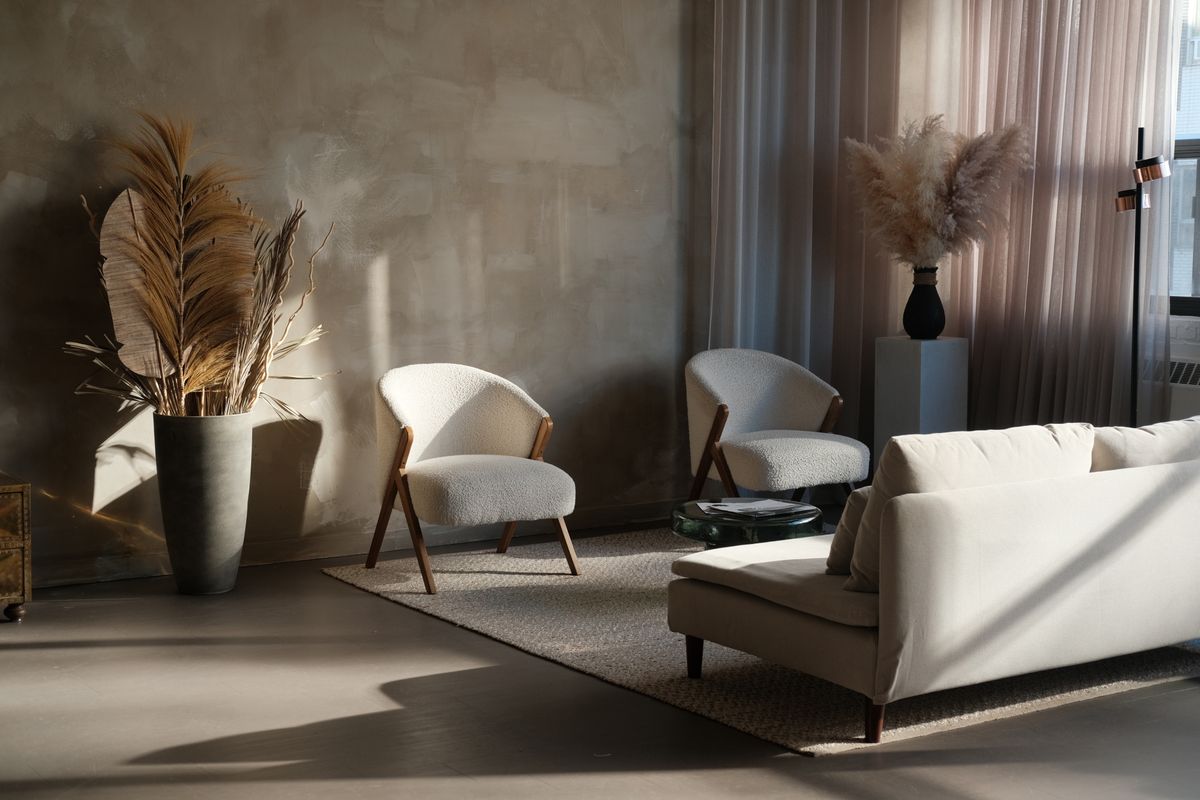
For interior designers, mood is everything: materials, light, before and after. We also build websites for landscape architects and engineering firms. If you build or remodel, take a look at our contractor website design.
Architectural photography and renderings that load fast
Sharp images on a big screen and light ones on a phone, prepared in several sizes and with alt text so Google can find them too.
SEO for architecture firms and local search
Pages for each service and area, project pages with real copy and a well-kept Google Business Profile, so people looking for a firm nearby find you. We handle it with our SEO service.
WordPress web design: you add every new project
Create a new project page, upload photos or edit copy from a simple dashboard, without depending on anyone. And if you'd rather hand it off, maintenance is optional.
Here's what your firm's website could look like
Ocre Estudio is a fictional brand we designed to show you how we work: a moving editorial gallery, the studio's process and selected projects. Click through it the way your next client would.
 ocreHomes that reflect the lives within.View projects
Live demo
Open the demo
ocreHomes that reflect the lives within.View projects
Live demo
Open the demo
Project pages with renderings, drawings and architectural photography
The project page is where a client decides whether you're the firm they're looking for. So we give it the space it deserves: large images, the story behind the commission and a way to get in touch that's always close at hand.
- 1
Interior and architectural photography, full screen
A full-screen gallery, from the big picture to the details, with credit to the photographer. And if you need video of the project, count on our video production service.
- 2
Renderings, 3D visualization and virtual tours
What isn't built yet can still be shown: well-presented renderings, clearly labeled as visualizations, and a virtual tour if you have one.
- 3
Location, size, year and team for every project
The details clients look for and award juries appreciate, right there. Plus a button to tell you about their project while their interest is high.
Marketing for architects: from website to commission
A beautiful website nobody visits won't bring in work. We connect it to the channels where your clients are looking and set it up so every interested visitor ends up sending a project inquiry.
- Visits from Google, Google Maps, social media and directories, straight to your projects.
- Inquiry forms that ask about project type, location and timeline before anyone calls you.
- Tracking which channel brings real inquiries, so you invest where it pays off.
How architects get clients from their website
Three things make the difference: specializing so your website speaks to a specific client, publishing every project with its story, and answering on your site the questions you always get (timelines, permits, how you work). Ads and social media multiply what your website already does well.
Advertising for architects and interior designers
Campaigns on Google Ads for people already searching for a firm, and on Meta Ads so your work reaches people who are dreaming about their home. Every ad leads to a page with similar projects and a short form, not just to your homepage.
SEO for architects: Google, Maps and AI answers
People looking for a firm ask Google, Maps and, more and more, ChatGPT. We optimize your service, area and project pages with our SEO service, and prepare them so AI tools can cite you with our AI search optimization.
Website design for architects in four steps, starting with a pre-design
No signing blind. Before we build anything, you see your firm's website working, click through it and decide.
Free consultation
A call or video call with Jesús, CEO of DigiAcción. We look at your current website if you have one, your projects, the client you want to attract and where your commissions come from today. Free, with no commitment, if you qualify.
- What sets us apart
Clickable pre-design in about a week
In about a week, sometimes sooner, you get 2 or 3 clickable pre-designs. You browse them like the real website, before you pay anything (free if you meet the requirements).
Fixed quote and schedule
Once you pick a pre-design, you get a fixed quote and a delivery schedule based on the scope. No surprise line items halfway through.
Build and launch
We build the site with your project pages, optimized images and technical SEO. Then we show you how to add new projects and edit your copy.
This is what a pre-design looks like: click around the way your next client would.
How much does an architect website cost? From €1,500, one payment
Many firm websites are tied to a monthly subscription or a platform. We work with a single payment for the design: no monthly fees and no fine print.
What the final price depends on
- The number of projects and pages
- How many languages the site needs
- Sections like process, team, press or a blog
- Features like project filters, virtual tours or inquiry forms by project type
What you always get
- A free first consultation with no commitment, if you qualify
- 2 or 3 clickable pre-designs, free if you meet the requirements
- A fixed quote and schedule once you approve the pre-design
- If you don't have a brand identity yet, we create it
Architect website design from
€1,500
paid once
You get the fixed quote after reviewing the pre-designs.
What our clients say about working with us
They designed the website I had in mind, and they're helping me a lot with lead generation. DigiAcción is amazing!
Working with DigiAcción has been a unique experience. The results have been exceptional in every way. A 10 out of 10.
Quim GrasTEP Assessors We're very happy with Digiacción's professionalism and service. From day one, they've been ready to help us. The results speak for themselves.
Lydia MartinezAbogados MS We've worked on several projects with Digiacción, and it's truly a pleasure and a privilege. They're honest, hardworking and, above all, very good at what they do.
PolCEO, Joira Software Professional, creative and focused on results. DigiAcción is helping us establish our brand as a leader in professional debt relief consulting services.
Jordi A.Debt relief consulting Jesús, the founder of DigiAcción, is passionate about his work. We've worked together on several projects, and it's amazing to work with him.
DanielEntrepreneur (CEO, Ads&Law) I'm Carelys, Head of Marketing at ILLAY Legal. We've been working with DigiAcción, a digital marketing agency in Andorra that handles our SEO, our content and our YouTube channels, for about a year now, and our rating couldn't be higher. They're professional and, above all, honest: they tell you what works and what doesn't, without overselling. When a problem comes up, they don't just point it out, they show up with the solution ready. They get far more involved in the project than you'd expect from an outside agency, and you can see it in the day-to-day work and in the results. Highly recommended.
CarelysHead of Marketing at ILLAY Legal Working with DigiAcción was a very pleasant surprise, exquisite attention, fast execution, perfect web design they quickly understood the concept of my project. Thanks a million
Turispad S.L.Web design They designed my website from scratch with exquisite speed and taste. Discovering DigiAcción is well worth it, don't think twice and get in touch with them. Thank you so much
Selecta IconicWeb design Working with DigiAcción has been an excellent experience. We hired them to develop our website and the whole project we had in mind, and they managed to bring it to life exactly as we had imagined it. They answered every question we had right away, always with professionalism and a personal touch. The process was smooth, clear and very easy. If anyone asked us whether we'd work with them again, we'd do it without hesitation. Thanks!!
Jamie O.Web development DigiAcción completely transformed my online business in Andorra. Their web design team created an attractive website that perfectly reflects our brand identity. On top of that, their SEO strategies have significantly improved our search engine rankings, bringing in much more organic traffic. I'll definitely contact them again for future projects.
Sergio DíazWeb design and SEO I don't usually write reviews, but with DigiAcción I definitely had to. It's the best web design agency in Andorra. They also worked on my organic SEO, and the results have been INCREDIBLE.
Khaleb Angarita SalcedoWeb design and SEO It's been a pleasure working with DigiAcción, this digital marketing agency is on par with the best. And I've worked with quite a few, thank you for your work and professionalism. We'll be back!
Gerard LlachDigital marketing Top SEO agency in Andorra. I've been working with them on several digital marketing projects for a while, and they're very good professionals
Aitor RuizFounder of GetALink Delighted to work with Jesús, Dani and their team. Very serious and professional. Friendly service and a very efficient strategy. Highly recommended!!!!
Jordi LlachDigital marketing strategy
As featured in











Read more about architect website design and marketing
Portfolios, interior design, photography, marketing, SEO, advertising and branding
Architect website design: what an architecture firm website needs
Architect website design means building a firm's website around the person who commissions the work: someone who wants to understand, in a few minutes, what you do, how you work and whether their project is a fit. It isn't a pretty photo album. It's the tool that turns your built work into conversations with clients. That's why architect web design starts with that client, not with a template.
Many architecture websites are made for other architects: huge images, cryptic copy and a hidden menu. They look great in an awards roundup, but the homeowner planning a remodel or the developer looking for a firm gets lost. Good web design for architects balances both: the visual quality your work deserves and the clarity a non-architect needs.
These are the pillars of an architecture firm website that brings in commissions:
- A project-by-project portfolio, with a page for each project and filters by type: residential, renovation, commercial or civic.
- Services explained for clients: design, construction documents, construction administration, interiors, whatever you offer, in plain language.
- The firm and its process: who's behind it, how you work and what happens at each phase.
- Easy contact: a short form, a phone number and WhatsApp one tap away.
- Speed and technical SEO from day one, because architecture websites are heavy with images and Google rewards fast pages.
One question guides the whole website design for architecture firms: what does your ideal client need to see, read and feel to contact you and not the firm next door?
Websites for architecture firms, studios and practices
The same business goes by different names: architecture firm in the US, practice in the UK, studio almost everywhere. Your website should speak the way your clients search. We build websites for one-person studios and for firms with several partners, and an architecture studio website needs the same care as a large firm's. We work remotely, wherever you're based.
Best websites for architects: what the top architecture firm websites have in common
If you study the best websites for architects, the ones that actually win work, you'll notice the design varies a lot and the practical side hardly at all. This is what the top architecture firm websites have in common:
- A homepage that says what you do and for whom in one sentence: “custom homes in Austin,” “hospitality interiors in London.” The photo supports it; the sentence closes the deal.
- Projects with their own pages, each with its own URL, copy and details, not one big gallery where everything blends together.
- A page for each service: new homes, renovations, interiors, commercial work. Each service is a different search on Google.
- Your process, phase by phase. Knowing what will happen and when reassures someone about to invest their savings in a home.
- Who you are, with faces and names. On a project that lasts months, trust is personal.
- Press, awards and publications, if you have them. That's social proof in this industry.
- A contact form that qualifies: asking for project type, location and timeline saves you calls that go nowhere.
- Speed: optimized images so the site loads fast on a phone, too.
A word of caution about lists of the best architecture website design: many architect website examples come from big-name firms that don't need to win clients online. For a firm that does, look for three things: whether you understand what the firm does within ten seconds, whether each project tells a story and whether you can find the contact details without searching. Among the best architecture firm websites, the ones that convert are rarely the most daring; they're the ones that make the next step easy. To see these elements in action, open our interior design studio demo and click through it like a client would.
Interior design and architect websites: how to explain your fees
“How much does an architect cost?” and “how much do interior designers charge?” are common searches before anyone asks for a quote. If your website says nothing about fees, clients look for the answer somewhere else or rule your firm out, afraid of a price they don't even know.
You don't have to publish a rate card. Explaining how you calculate your fees is enough to filter inquiries and build trust:
- How you charge: a percentage of construction cost, a price per square foot or square meter, a fixed fee per phase or an hourly rate for one-off consultations.
- What each phase includes: schematic design, design development, permits, construction administration or furniture selection.
- What it doesn't include: permit fees, other consultants' reports or the construction itself, so nobody gets surprised.
- A typical project with a guide range, if you're comfortable publishing it.
Interior design website design can go one step further with a form that asks for square footage, type of space and service, and ends in a first estimate or a call. Good web design for interior designers starts the conversation with realistic expectations on both sides.
Architecture portfolio website: how to present each project
Your architecture portfolio website is the heart of your online presence. Clients want to see what you've built before they trust you with their own project, and the way you present each project says as much about you as the project itself.
A good portfolio doesn't show everything. It shows your best work and tells its story well. This is how we present each project on its own page:
- A cover photo that works on its own, because it's the one people will see in the project list, on Google and when someone shares the link.
- The brief in two lines: what the client wanted and what problem needed solving.
- The solution, explained for people, not for a jury.
- Photography, drawings and renderings in the order that makes them easiest to understand: from the big picture to the details.
- Key facts: location, size, year, building type and team, with credit to the photographer.
- Similar projects and a contact button, to catch the moment when interest peaks.
Sorting projects by type helps every client see themselves in your work: someone planning a home shouldn't have to scroll past a warehouse first. And each project page with its own URL and copy can show up on Google on its own, something a wordless photo gallery can never do. If you browse architecture portfolio website examples, you'll see the strongest ones are edited, not exhaustive: ten projects told well beat forty loose photos. That's also why the best websites for architecture portfolio presentation load quickly and keep the text short and clear.
A portfolio that wins clients vs. a portfolio that gets you hired
They're not the same thing. Almost everything you'll find about the architecture portfolio, from architect portfolio examples to any architecture portfolio template, is aimed at students and job seekers: a PDF with boards, layouts and plenty of technical drawings. That format convinces another architect. The client paying for the build is convinced by other things: photos of lived-in spaces, copy they understand and the feeling that you listen. The portfolio on your website should be the second kind, so that's the client we design it for.
Interior designer website design: what your site needs to win clients
An interior designer doesn't sell square footage. You sell how someone will feel inside a space. That's why websites for interior designers speak a different language from architecture firm websites: atmosphere matters more than the floor plan, materials more than elevations, and the client is often a homeowner who decides with the heart and confirms with the head.
What an interior design website can't do without:
- An interior design portfolio website organized by space: homes, kitchens, retail, hospitality or offices.
- Before and after for renovation projects. Few things persuade as well.
- Clear services: full-service design, consultations, e-design, project management or custom furniture.
- Your process, step by step, with what the client receives at each stage.
- A contact or consultation button always in view, and WhatsApp for those who prefer to text.
When you look for interior design website ideas, you'll find plenty of templates and inspiration galleries. They're useful for ideas, but what helps clients find you is an interior design website with real copy for each service and each area. And if you're comparing an interior design website designer with a DIY template, remember that the best interior designer websites aren't the most decorated; they're the ones where the next step is obvious. Website design for interior designers starts with that question: what should your ideal client do after looking at your work?
Websites for engineers and landscape architects
The same approach works for neighboring professions. Website design for engineers and engineering firms needs clear services and projects explained for decision-makers; a landscape architecture website needs gardens and public spaces shown across the seasons. If you prepare homes for sale (home staging), take a look at our real estate website design as well.
Architectural website design for design-build firms
More and more firms don't stop at design: they also build, with their own crews or with trusted trades, and offer clients a single design-build contract. Their architect websites face a double challenge: win clients over with the design and reassure them about construction, which is where people fear delays and cost overruns most.
This is what we add to architectural website design when the firm also builds:
- The full process on one page: from the first sketch to handing over the keys, with who handles each phase and how progress is reported.
- Projects under construction, not only finished ones: photos of framing, systems and finishes that show the job site is under control, not just that the result looks good.
- How construction is priced: what a fixed price includes, which line items can change and how changes get approved.
- Reviews from clients who lived through the build, talking about communication and timelines, not just the design.
That way the website sells both halves of the project: the space the client imagines and the construction that keeps them up at night.
Architectural photography, renderings and virtual tours on your website
In architecture, images are the product a client sees before they ever meet you. They usually come from three sources:
- Architectural photography: the finished building, in good light and with thoughtful framing. If you can invest in one thing, invest in this. Interior photography with signs of life, a set table or someone reading, helps the client picture themselves inside.
- Renderings and visualization: architectural rendering and architectural visualization show what doesn't exist yet. They're essential for new builds, competitions and developments, and it's always wise to label them as visualizations. If you work with 3D rendering services, plan the images with the website in mind.
- Virtual tours and video: a virtual tour lets people walk through the space. A short video of the finished project works beautifully on the homepage and on social media.
The technical challenge is speed. An architecture website loaded with huge photo files takes forever to open, and on a phone the client leaves before seeing anything. That's why we prepare every image in modern formats and several sizes, so it looks sharp on a large screen and light on a phone. Each image also gets alt text that describes what's in it, helps people who use screen readers and lets Google index it. That way a strong rendering can show up in image search and bring you visits on its own.
Another detail that makes a difference is sequence: open with your best photo, alternate wide shots and details, and close with an image that leaves people wanting more. If you already have photography and renderings, we integrate them and make them shine. And if you need video of your projects, count on our video production service.
Marketing for architects: what a digital marketing agency does for your firm
Most firms live on word of mouth. It works, but it has two problems: you don't control it, and it doesn't grow when you need it to. Marketing for architects exists so your next commission doesn't depend only on a past client remembering you at a dinner party. Whether you call it architectural marketing or marketing for architecture firms, the goal is the same: more inquiries for the kind of project you actually want.
Besides designing websites, DigiAcción is a digital marketing agency, and for a firm the order matters: first a website that converts, then traffic. Paying for ads that send people to a slow, confusing website is money down the drain. Once the website is ready, digital marketing for architects rests on four legs:
- Search visibility on Google, Google Maps and AI chat answers, by service and by area.
- Advertising on Google Ads and social media when you need work soon or want to break into a new area.
- Content that answers your clients' questions: how long a renovation takes, which permits are needed, what the process looks like. Content marketing for architects builds trust before the first meeting.
- Measurement: knowing which channel brings real inquiries and which only brings visits.
A realistic architecture marketing strategy starts with a choice: which kind of project you want more of (homes, renovations, commercial), in which area and with which client. An architecture marketing plan that tries to speak to everyone ends up speaking to no one. Architecture firm marketing works best when the message is specific.
Interior design marketing: how designers get clients
Marketing for an interior design business has a natural ally: visuals. Instagram and Pinterest are the shop window for many designers, but the commission closes on the website, where the client sees your process, your services and how to reach you. If you're wondering how to get interior design clients beyond your own circle, the answer usually combines visual content, local SEO and a website that turns inspiration into an inquiry. That's what a good interior design marketing agency should focus on.
Social media for architects and interior designers
Each network plays its own role. Instagram for architects is the everyday showcase: construction, details, process. Instagram for interior designers works even better, because interiors are made to be shared. LinkedIn works with developers, companies and corporate clients, and Pinterest attracts people who are imagining their home. Social media for architects builds visibility; your website turns it into commissions. If you want ads on these networks, we run them with Meta Ads.
SEO for architects and interior designers
SEO for architects has an advantage few firms take: in many cities, the competition is weak. Search for “architect for a custom home” or “interior designer for a kitchen remodel” in your city and you'll probably see directories, marketplaces and very few well-built firm websites. There's room for you.
SEO for architecture firms works on three fronts:
- Pages for each service and area: “home renovation architect in Denver,” “restaurant interior design in London.” Each page answers a real search from a real client.
- Project pages with real copy: every well-titled, well-described project can attract visits on its own, including from image search.
- Local SEO for architects: your Google Business Profile, with project photos and reviews, is what puts you on Google Maps when someone looks for a firm nearby.
There's a new channel that changes the rules: AI chat. More and more people ask ChatGPT or Gemini which firm they should hire or how a renovation works. For AI to cite you, your website has to explain clearly what you do, where and for whom, with structured data and direct answers an AI can quote word for word. We handle that with our AI search optimization service, alongside classic SEO.
The same applies to SEO for interior designers. And if you compare SEO services for architects, here's an honest tip: SEO doesn't show results in a week, but it compounds. Every project you publish with its own page and copy is one more door a client can walk through, and that door stays open for years.
Advertising for architects: Google Ads and social ads
Advertising for architects has a bad reputation in the profession, as if advertising were in poor taste. But every day clients search Google for “architect for a remodel” or “interior designer near me,” and somebody shows up at the top. The question isn't whether to advertise, but how to do it without losing the elegance of your brand.
- Google Ads for architects reaches people who are already searching: “architecture firm in Seattle,” “penthouse renovation.” It's the advertising with the strongest intent, and each ad should lead to a specific page (a service, an area), not your homepage. We manage it with our Google Ads service.
- Social ads on Instagram and Facebook build desire and remind people who already visited your website about your work. They're a natural fit for interior design advertising, where the image is everything.
If you're looking for advertising examples that work, notice one detail: good ads don't talk about the firm, they talk about the result for the client. “Your home, with natural light in every room” sells better than the year the firm was founded. Advertising for interior designers follows the same rule. Whatever the channel, the website has to be ready to welcome those visitors: a short form, projects similar to the ad and contact one tap away. Otherwise you're paying for clicks that go nowhere.
One last idea: start small, with one area and one type of project, track which inquiries come in for a few weeks and scale what works.
Architect logo and branding for your firm
An architecture firm lives on its aesthetic judgment, and its brand is the first proof of that judgment. An architect logo made in a hurry says the opposite of what you sell. A well-designed architecture firm logo is usually restrained, often typographic, and able to work at very different sizes: in the website header, on a drawing set, on a construction site banner and as a tiny icon on a phone.
Architect branding goes beyond the logo:
- Typography, which in architecture says almost as much as the symbol.
- A restrained color palette that lets the photography of your projects breathe.
- Tone of voice: how you write on the website, in proposals and on social media.
- Templates for reports, presentations and boards, so everything that leaves the studio says the same thing.
The same goes for an interior designer logo and for interior design branding, where the brand is usually warmer and more personal. Look at the architecture firms whose logos you admire and you'll see most are simple: the projects bring the personality. A good logo doesn't compete with the work; it introduces it.
If you don't have a brand identity yet, we create it with our graphic design service, so your website launches with your brand already in place. In the Ocre Estudio demo you can see how a typographic logo, a plaster, ink and ochre palette and a short tagline carry through the whole site without upstaging the photos.
Architect and interior designer business cards that match your brand
A firm's image doesn't end on the screen. That's why we also design your business cards, with the same logo, colors and typography as your website, so what you hand over at a site visit and what a client finds on Google later tell the same story. Good architect business cards are restrained, easy to read at a glance and point to your website, with a QR code or a short URL, because that's where clients will see your projects. The same goes for interior designer business cards, where a warmer palette or a textured paper can speak to your style. We take care of the design; you print them with whichever printer you prefer.
Houzz, publications or your own website: where architecture clients come from
Many firms start looking for clients on platforms. Houzz for professionals, local directories and industry listings have something appealing: they already have the traffic. People planning a project go there and request quotes.
Platforms have their place, but it pays to understand the model before you bet everything on them:
- You compete side by side with other firms, sometimes on the same screen and with price as the first filter.
- The platform makes the rules: how profiles are ranked, what it costs to stand out and which client details you get to see.
- The profile isn't yours: if the terms change or you decide to leave, you lose what you've built there.
Our advice: use Houzz or a good directory as a shop window and your website as your home base. Make sure your profile links to your website, and that once people get there they see all your projects, your process and how to reach you, without distractions or competitors next to you. Each platform's terms and prices change often, so always check them on its official website.
Publications also help. Getting a project featured, for example by following Dezeen's guidelines to submit a project, brings prestige and links that support your SEO. But the client who pays for the build rarely arrives that way. They search Google, ask an AI or ask someone they trust, and sooner or later all three paths lead to your website.
Website builder, template or custom website: Squarespace, Wix and WordPress for architects
There are three ways to get a firm's website, and each has its moment:
- A website builder, like Squarespace for architects or Wix, with one of their architect website templates: quick and affordable to start, but your site will look like many others and it can fall short once you want SEO by service, several languages or well-crafted project pages. Interior designers website templates have the same limits.
- WordPress themes for architects: more flexible, but someone has to adapt the theme, optimize the images and keep everything up to date.
- A custom website, which is what we do: your brand, your projects and your way of working, built on WordPress so you can add projects and edit copy from a simple dashboard.
When people ask for the best website builder for architects, the honest answer is that the tool matters less than the thinking behind it: which client you want, which projects you show first and what has to happen for someone to contact you. That's why we always start with 2 or 3 clickable pre-designs, in about a week, that you browse like the real website before you decide anything, free if you meet the requirements. Once you choose, you get a fixed quote and schedule based on the scope. Our WordPress web design for firms starts at €1,500, paid once, with no monthly fees or fine print.
Frequently asked questions about architect website design and marketing
With us, a firm's website starts at €1,500, paid once, with no monthly fees or fine print. The final price depends on the number of projects and pages, how many languages you need and sections like your process, press or a blog. You'll know before we start, because you get a fixed quote after reviewing the pre-designs.
It's the selection of projects an architect or firm uses to show their work: photography, drawings, renderings and an explanation of each commission. For a firm looking for clients, the best portfolio is its own website, with a page for each project that clients can browse and Google can find. A PDF is still useful for competitions or to send by email.
Choose a short name that's easy to say and spell, that won't tie you to a single type of project if you want to grow, and that's available as a domain and on social media. Many firms use the partners' last names; it works, but think about what happens if someone else joins later. Before deciding, check that it isn't already registered as a trademark in your country.
Create or claim your firm's Google Business Profile, verify it and choose the right primary category, such as architect or interior designer. Then complete it with your address or service area, hours, project photos and a link to your website, and reply to every review. The more complete, active and consistent with your website it is, the easier it is to show up when someone nearby searches for a firm.
It depends on how competitive your area is, how many services and locations you want to rank for, and whether you're starting from scratch or from a website that already ranks. That's why we don't quote a rate without looking at your case: we assess it in the first consultation, which is free if you qualify. There we tell you plainly which work makes sense for your firm now and what can wait.
It helps clients who are looking for a firm find you and get in touch: it designs or improves your website, works on SEO for Google and AI search, and manages advertising on Google Ads and social media. What matters is that everything points to real project inquiries and that you can see which channel brings them. At DigiAcción we handle both the website and marketing for architects, and in the first consultation, free if you qualify, we tell you where to start.
It can be, as a shop window that brings visibility and leads, especially when you're starting out or entering a new area. Keep in mind that you compete next to other professionals and play by the platform's rules, so check its current terms and prices on its official website. Whatever you decide, link your profile to your own website, where clients can see all your work without distractions.
Yes. We build the site on WordPress with a simple dashboard to create a new project page, upload photos and edit copy, and we show you how to use it at launch. If you'd rather we take care of it, maintenance is optional, monthly or quarterly.
Yes. The domain and hosting are registered in your name, so the website is yours and you don't depend on us. If you ever want to switch providers, you can.
You can start with our interior design studio demo: a website for a fictional studio that you can click through, with an editorial gallery, its process and selected projects. And before you commit to anything, you get 2 or 3 clickable pre-designs of your own website, free if you meet the requirements.
It depends on the scope: the number of projects, pages and languages. The pre-design is ready in about a week, sometimes sooner, and once you approve it we set the delivery schedule with you. What usually takes longest is gathering the photos and copy for each project, so it's worth starting there.
Yes. We work remotely, wherever you're based: meetings happen by video call and you review the pre-designs online. We write the copy and SEO for your market, in the words your clients actually use.
Make your next commission start on your website
Tell us how you work, and we'll show you what your firm's website could look like. In about a week, you could be clicking through your pre-design.
Free first consultation, no strings attached (if you qualify). Prefer WhatsApp? Message us today.
Related services
We build custom websites for every kind of business. See how we work in other industries.
- Contractor website design
- Real estate website design
- Hotel website design
- Web design for consulting and management firms
- Web design for lawyers and law firms
- Digital marketing agency for lawyers
- Web design for restaurants and hospitality
- Web design for clinics and healthcare
- Vacation rental website design
- Auto repair website design
- Veterinary website design
- Gym and fitness website design
- Website design for IT companies
- Fashion website design
Want to grow your brand?
Discover all our digital marketing services.
Ready for the website your firm deserves?
Tell us how you work and what you need. Jesús, CEO of DigiAcción, will review your current website (or your starting point) and tell you what your firm needs, free and with no commitment if you qualify.
Chat on WhatsApp
If you prefer something more direct, message us on WhatsApp. We'll reply right away.
5.0
+ 24 Google reviews
Or fill out the following form