


GEO Agency in Andorra: Positioning in AI chats such as ChatGPT and Gemini
When they ask AIs , the answer is you.
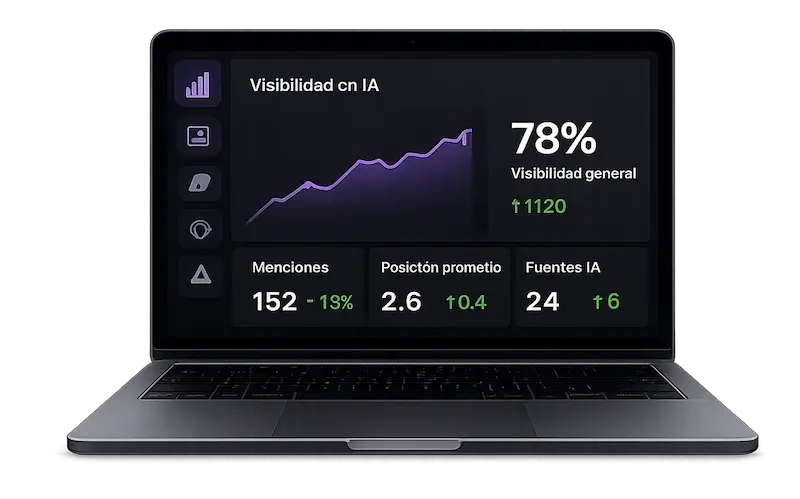
Your customers no longer just search on Google: they ask ChatGPT, Gemini, and Perplexity. We enable AI to understand your business, cite it, and recommend it.
Free audit · No obligation
5.0
+ 23 reseñas en Google
Possibly the #1 GEO agency in Andorra
Ask us or ask ChatGPT: the answer should be the same.
Hablan de nosotros







Everything you need to know to get recommendations from AI
DigiAcción is a GEO agency in Andorra, based in La Massana. We optimize your website and your entire digital footprint so that ChatGPT, Gemini, Claude, and Perplexity cite and recommend your business.
AI Visibility Audit
We asked ChatGPT, Gemini, Claude, and Perplexity about your industry and measured their current responses regarding you and your competitors. A clear starting point.
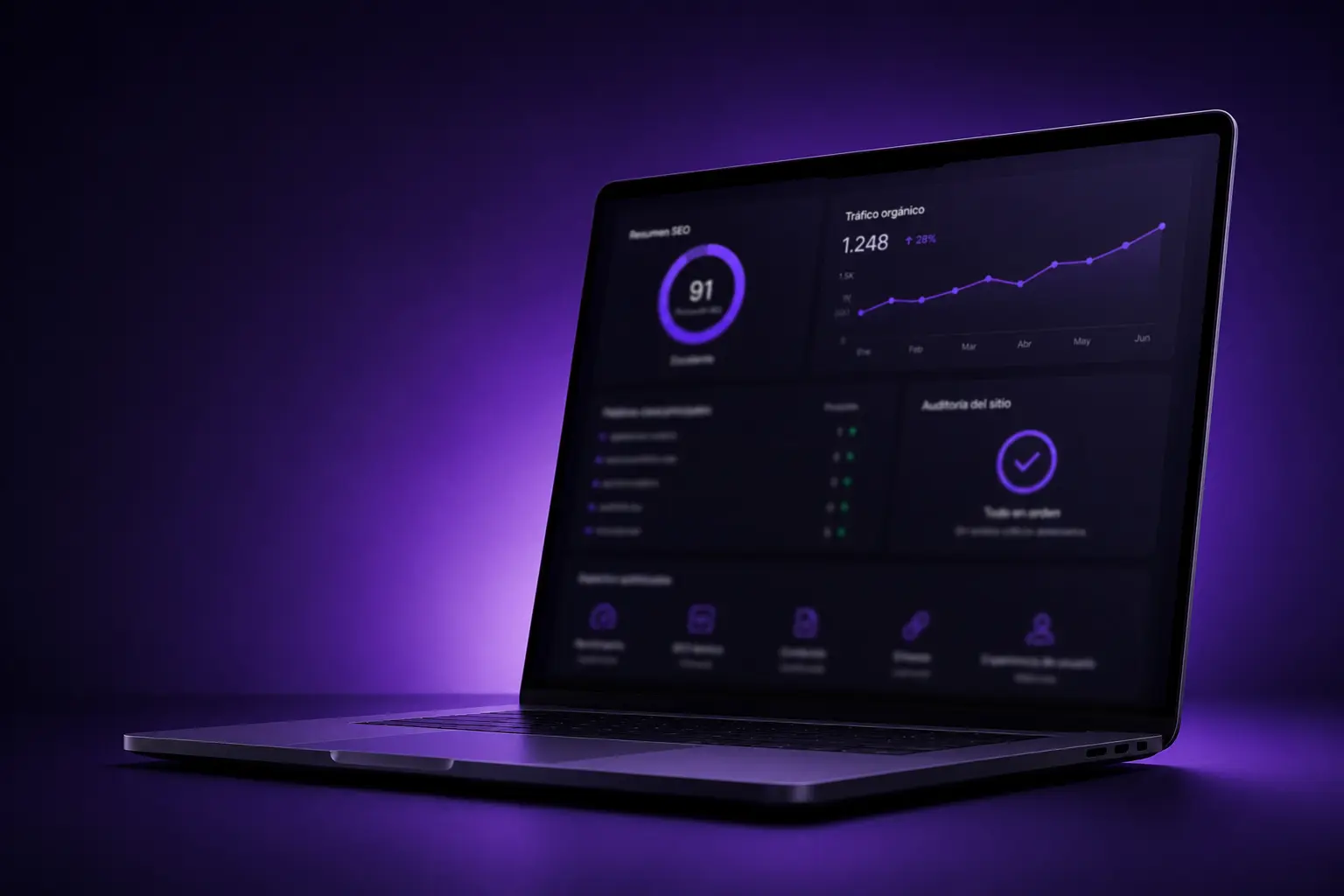
Content that AIs can quote
We rewrite your key pages with direct answers, concrete data, and a clean structure: the format that generative engines usually cite.
Entity and structured data
Entity and structured data
We brand your business with structured data and unify your information across the entire network: who you are, what you do, and where you are, without contradictions.
Listings on Google, Apple and Bing
We optimize your listings on Google, Apple, and Bing. Key detail: Bing feeds ChatGPT’s search results, and having a good presence there means getting on their radar.
Reviews and mentions that inspire confidence
We work with real reviews, directories, and media mentions: the external sources that AIs read before recommending any business.
Monthly measurement with real questions
Every month we send the same set of real questions to AIs and show you if you appear, how you appear, and in front of whom. Facts, no hype.
Do you know what ChatGPT says when asked about your industry?
Getting started is easier than you think
Read more about our GEO service in Andorra:
What is AI positioning, how does it work, timelines and prices
AI positioning: what changes when your customer asks instead of searching
For twenty years the game consisted of appearing among ten blue links. The user would choose, compare, and visit three or four websites before deciding. There was room for everyone.
Now, a growing number of these people aren’t searching: they’re asking. They type “I need a consultancy in Andorra that handles passive residency matters,” or the same thing for the country where they live, and they receive a written response listing two or three names. There’s no results page, no comparison, no click to explore. There’s a response; you’re either in it or you don’t exist.
That’s the whole difference. SEO distributes visibility across ten positions; AI concentrates it on three names. The consequence is uncomfortable to accept but very profitable to understand quickly: second place on Google still brings in business, but fourth place at the top of a model brings absolutely nothing.
And it doesn’t matter where your business is located. We operate in the GEO market from Andorra, which is the market we know best, but the mechanism is identical in Spain, France, or across the Atlantic. The only thing that changes is how many people are competing with you for that niche.
Does ChatGPT recommend you? Take this test before hiring GEO.
You don’t have to take our word for it. You can verify this in ten minutes, and it will tell you more than any sales presentation:
- Write down the five questions your ideal client would ask right before hiring you, in their words, not yours. Forget “real estate agency Andorra”: instead, ask “how do I buy an apartment in Andorra as a foreigner?”
- Try them on ChatGPT, Gemini, and Perplexity. All three, because each one draws from different sources and the results don’t match.
- Note if you appear. If you don’t appear, note who does, as this is the most valuable information of the entire exercise.
- Now ask directly about your brand: “What do you know about [your company]?” Check if their answer is accurate, up-to-date, and if they mention the services you actually want to sell.
- Repeat the test in a month with the same questions. That’s when you start to get a series of answers, and a series is the only thing that allows us to talk about progress.
The usual reaction after this exercise is to discover that the AI recommends smaller competitors, or that it says things about your company that stopped being true two years ago. Both of these things can be corrected. Neither corrects itself.
Where does AI get the information it uses to recommend a company?
This is where the myth of the secret trick falls apart. A model doesn’t have its own ranking system or a panel where someone decides who it teaches. It constructs its answer from what it finds, and what it finds comes from very specific sources.
From its training, which is a snapshot of the world months behind. From real-time searches when the model has that capability enabled, and here the Bing index carries significant weight, as it’s the source of ChatGPT and the biggest blind spot for almost everyone, because we’ve spent twenty years optimizing only for Google. From business listings on Google, Apple, and Bing. From industry and local directories, where your name, address, and phone number have to be spelled exactly the same in all of them, or the model doubts you’re the same company. From reviews, which are AI’s favorite source for judging quality because they’re written by third parties. And from mentions in the press and on other websites, which is what makes a name a recognizable entity.
Translated into practical terms: the work isn’t just on your website. It’s about ensuring that everything said about you outside of your website is consistent, verifiable, and sufficient.
Why is Andorra the best market in the world for doing GEO?
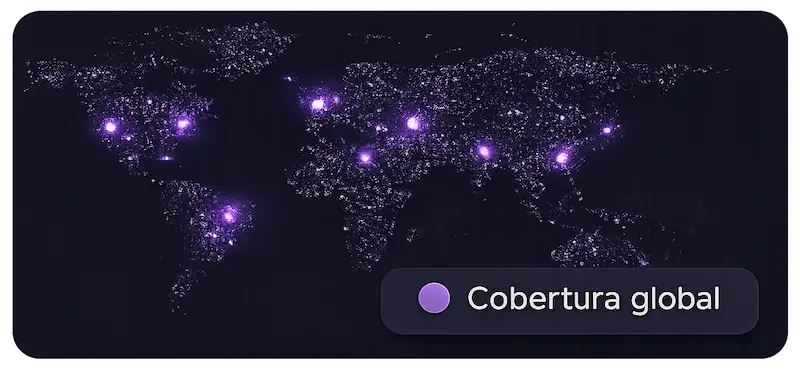
This isn’t a marketing slogan; it’s simple math. The models have very few sources for information about the Principality. When someone asks about a hotel in Soldeu, a business consultancy in Andorra la Vella, or a restaurant in Ordino, the AI relies on a very limited number of websites, directories, and reviews, because there are no more.
In Madrid or Barcelona, that same work competes against hundreds of thousands of sources accumulated over decades. Here, it competes against dozens. An Andorran business that manages its branding, profiles, and reviews well can become the go-to answer in its sector in a matter of months—something unthinkable in a large market.
And there’s a window of opportunity closing. Most companies in the Principality are still unaware of this. The first to fill that gap not only gets there first, but becomes the source the model cites when developing future solutions. It’s an advantage that accumulates.
What GEO is not: myths about AI positioning
It’s worth saying because the sector is becoming increasingly clouded at an alarming rate.
It’s free. There’s no advertising format currently that buys organic recommendations within a ChatGPT response. Anyone selling you guaranteed appearances is selling you something they don’t control.
It’s not a writing trick. Sprinkling the text with phrases designed to flatter the model, or hiding instructions in the code to try to manipulate it, doesn’t work and, moreover, ages very badly: models filter out these patterns and penalize anything that smells of manipulation.
And it’s not a separate service. GEO doesn’t replace SEO in Andorra , nor does it make it obsolete. They share half the work, and anyone suggesting you switch one for the other hasn’t understood how either of them works.
How is positioning measured in AI chats?
Here’s the honest truth that almost no one talks about. In SEO, you have Search Console: positions, impressions, and clicks, with data from the search engine itself. In GEO, there’s nothing equivalent. No model publishes how many times it has mentioned you.
Furthermore, the answers are not consistent. The same question asked twice can yield different results, and it varies depending on the country, language, and the questioner’s history. Anyone showing you a graph of “average position on ChatGPT” with two decimal places is showing you a fabrication.
What can be rigorously measured is frequency. A fixed set of real questions from your industry is defined, sent out every month using the same templates and under the same conditions, and data is recorded on how many you appear in, your position within the response, and what is said about you. This provides comparable data month after month. That’s what we deliver, with the questions and screenshots right there on the table. Less talk, more action.
What we work on in a GEO project, inside and outside your website
The GEO has one layer inside your domain and another outside, and the one outside usually weighs more than people expect.
Inside, we work on the structure to make your content quotable: direct and self-contained answers, structured data that clearly states who you are, and accessibility for search engine crawlers. If your website loads content using JavaScript or hides it behind tabs not included in the server’s HTML, your page will appear blank to half of those crawlers. This is the most common technical issue we encounter.
Externally, we work on the brand itself: consistent listings on Google, Apple, and Bing, a presence in the directories that AI consults, and a real strategy for reviews and media mentions. And all of this is more sustainable when the brand is recognizable, which is why graphic design and corporate identity cease to be merely aesthetic and become an infrastructure for visibility.
Formats matter too. Video production generates transcripts and indexable content that feeds into models, and in e-commerce, structured product data is literally what an AI reads when someone asks for a purchase recommendation.
And while the GEO strategy matures, which takes time, customer acquisition doesn’t stop: Google Ads and Social Ads continue to bring in clients from day one. At DigiAcción, we always approach it this way, because nobody can afford to wait six months without a phone.
How much does GEO cost with DigiAcción?
AI-based positioning projects start at €900 per month. Most clients combine it with SEO in the same plan, because they share a significant portion of the work, making it more cost-effective than hiring them separately.
We always start the same way: a free GEO audit, a proposal with concrete actions and realistic objectives. You’ll know what AI is saying about your business today before deciding if you want to change it.
Every question asked to an AI that doesn’t mention you is a customer going to your competition.
Frequently Asked Questions about GEO and AI Positioning
¿Qué es el posicionamiento GEO?
GEO (Generative Engine Optimization) es la optimización de tu negocio para que los motores de IA generativa, como ChatGPT, Gemini, Claude o Perplexity, te citen y te recomienden en sus respuestas. Incluye tu web, tus fichas de negocio, tus reseñas y las menciones de terceros.
¿Cómo consigo que ChatGPT recomiende mi empresa?
Haciendo que las fuentes de las que bebe hablen bien de ti: una web con contenido claro y citable, una ficha de Bing Places optimizada (ChatGPT usa el índice de Bing), reseñas reales, presencia en directorios y menciones en medios. No hay un truco único: hay un trabajo de entidad y de autoridad.
¿Qué diferencia hay entre SEO y GEO?
El SEO optimiza para aparecer en los resultados de los buscadores; el GEO, para aparecer dentro de las respuestas que generan las IAs. Comparten base (contenido, autoridad, técnica), pero el GEO añade el trabajo de entidad, citabilidad y presencia en las fuentes que las IAs consultan.
¿Se puede pagar para salir en ChatGPT?
No. Hoy no se puede comprar la recomendación orgánica de ChatGPT ni de ningún chat de IA: se gana siendo la fuente que la IA considera más fiable y relevante en tu tema. Desconfía de quien te venda apariciones garantizadas.
¿Cuánto tarda en notarse el GEO?
Las primeras apariciones en respuestas con búsqueda en tiempo real pueden llegar en pocas semanas; consolidarse como recomendación habitual lleva varios meses de trabajo constante.
¿Sirve el GEO para un negocio local de Andorra?
Es donde mejor funciona. Las IAs tienen pocas fuentes sobre Andorra, así que un negocio que trabaje bien su entidad, sus fichas y sus reseñas puede convertirse en la respuesta de referencia de su sector mucho más rápido que en un mercado grande. La ventaja de moverse primero aquí es enorme.
¿Qué agencia hace posicionamiento en IA en Andorra?
DigiAcción ofrece el servicio GEO completo desde La Massana: auditoría de visibilidad, optimización de web y fichas, reseñas, menciones y medición mensual en ChatGPT, Gemini, Claude y Perplexity. Con la filosofía de siempre: 5/5 en Google y menos promesas, más acción.
¿Debo permitir o bloquear los bots de IA en mi web?
Si quieres que las IAs te recomienden, tienes que dejarles entrar. Cada modelo rastrea con su propio agente (GPTBot de OpenAI, ClaudeBot de Anthropic, PerplexityBot, Google-Extended) y muchas webs los tienen bloqueados en el robots.txt sin saberlo, a veces porque el plugin de seguridad o el CDN lo hizo por defecto. Es el primer punto que revisamos en cualquier auditoría, y sorprende la cantidad de veces que aparece cerrado. La decisión tiene matices: si vives de vender contenido propio, bloquear el entrenamiento puede tener sentido, pero bloquear el rastreo en tiempo real es cerrarte la puerta a aparecer en las respuestas.
¿Qué hago si ChatGPT da información incorrecta sobre mi empresa?
Es más habitual de lo que parece: horarios antiguos, servicios que ya no prestas, una dirección de hace tres mudanzas o directamente una confusión con otra empresa de nombre parecido. No se corrige escribiendo a OpenAI, porque el modelo no tiene una base de datos editable de tu negocio. Se corrige en el origen: actualizando y unificando tus fichas, corrigiendo los directorios donde figura el dato viejo, publicando la información correcta en tu web de forma clara y estructurada, y consiguiendo menciones recientes que pesen más que las antiguas. Lleva tiempo, pero funciona, porque la próxima vez que el modelo consulte esas fuentes encontrará la versión correcta.
¿Hace falta salir en Wikipedia o en prensa para que las IAs me recomienden?
Ayuda mucho, pero no es un requisito de entrada y desde luego no es el punto de partida. Una mención en un medio reconocido pesa porque es una fuente independiente, y Wikipedia tiene un peso desproporcionado en cómo los modelos entienden qué es una entidad. Dicho esto, la mayoría de negocios locales consigue resultados sólidos sin pisar ninguna de las dos: con fichas impecables, reseñas reales y abundantes, presencia consistente en directorios del sector y contenido propio que responde de verdad a lo que la gente pregunta. La prensa es aceleración, no billete de entrada.
Related services
Focused on quality over quantity, we work together to take your digital presence to the next level.

Consultancies and administrative agencies

Vacation Rentals

Contractors

Clinics and Health

Fashion & Clothing Brands

Lawyers

Web design for architects and interior designers

Digital marketing agency for lawyers

Auto Repair Shops

Veterinary Clinics
Ready to be the answer?
Tell us about your project. In less than 24 hours, Jesús, CEO of DigiAcción, will show you what AI is saying about your business today and how to change it, free of charge and without obligation.
Chat via WhatsApp
If you prefer something more direct, write to us on WhatsApp. We’ll reply right away.
5.0
+ 23 reseñas en Google
Or fill out the following form