


E-commerce agency in Andorra: WooCommerce and Shopify stores built to sell
Designed to sell, not just to exist.
We build WooCommerce and Shopify stores that convert, with what nobody else solves for you: customs, IGI tax, shipping and payment gateways from Andorra.
Free consultation · No obligation
5.0
+ 23 Google reviews
Quite possibly Andorra’s #1 e-commerce agency
Don’t take our word for it: the stores we’ve launched say it for us.

“They designed the website I had in mind and are helping me a lot with lead generation.”
Gorka Odiaga
Move Projects Andorra
They’re talking about us







Everything your store needs to truly sell
DigiAcción is an e-commerce agency in Andorra, based in La Massana. We build WooCommerce and Shopify stores for businesses in the Principality and beyond, solving what you can only know from the inside: customs, IGI tax, shipping and payments.
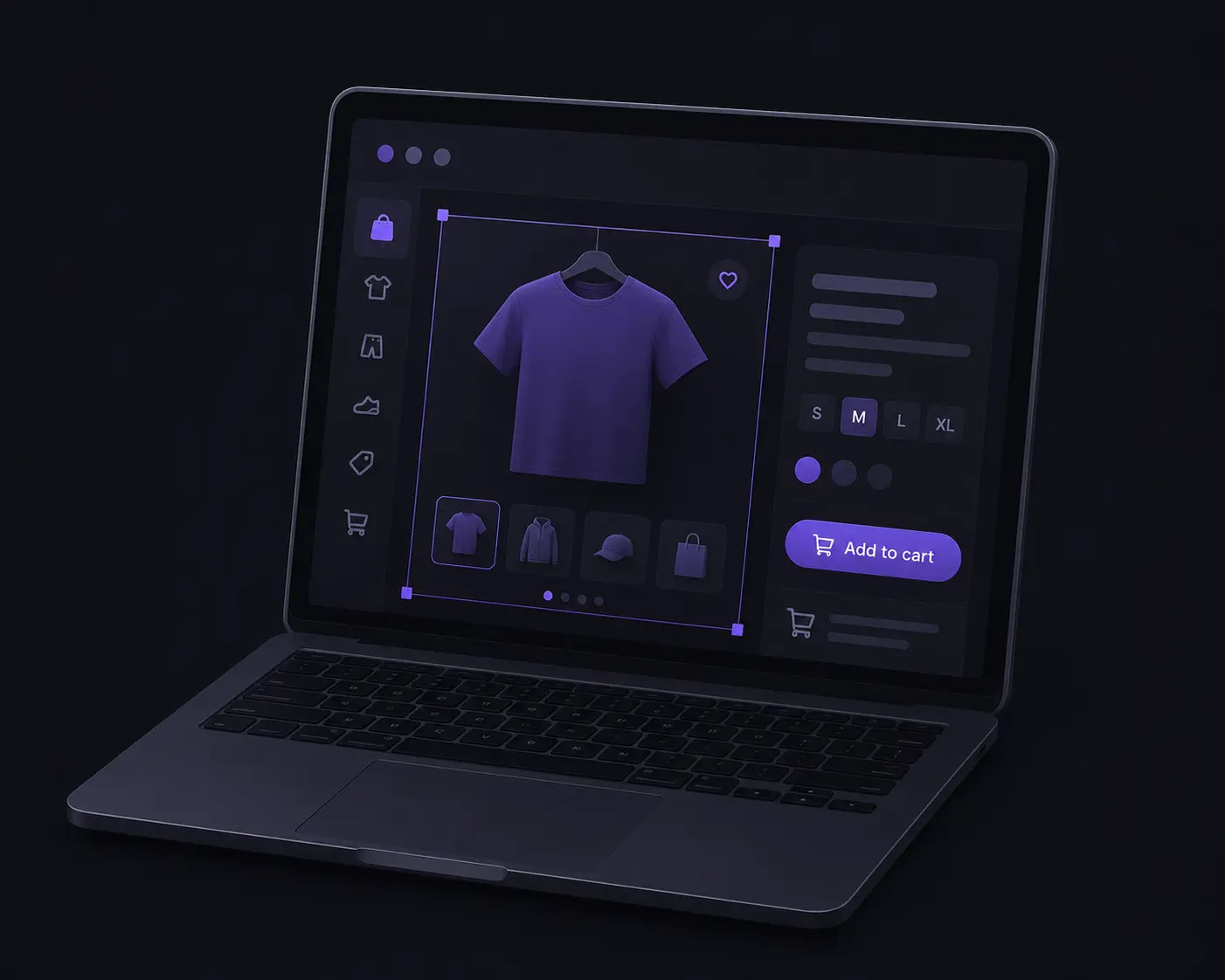
Stores that convert
Clear product pages, a frictionless checkout and trust at every step. We design the full journey so every visit ends in an order placed.
WooCommerce or Shopify, no dogma
We advise without dogma: WooCommerce if you want full control, Shopify if you value simplicity. We build the one that suits your business.
Selling from Andorra, solved
Customs, IGI tax, shipping to Spain and France and Andorran bank payment gateways: we solve the part no outside agency knows how to set up.
Ready for Google Shopping
Product structured data and a Merchant Center feed ready from day one: your catalog prepared for Google Shopping and for the AI engines.
Speed and security
Fast stores that pass the Core Web Vitals and stay protected against attacks. In e-commerce, every second of load time means lost sales.
Training and full autonomy
We hand over your store with training: upload products, manage orders and change prices without depending on anyone. Your business, your rules.
Built by DigiAcción
We don’t say it—our results and reviews do.

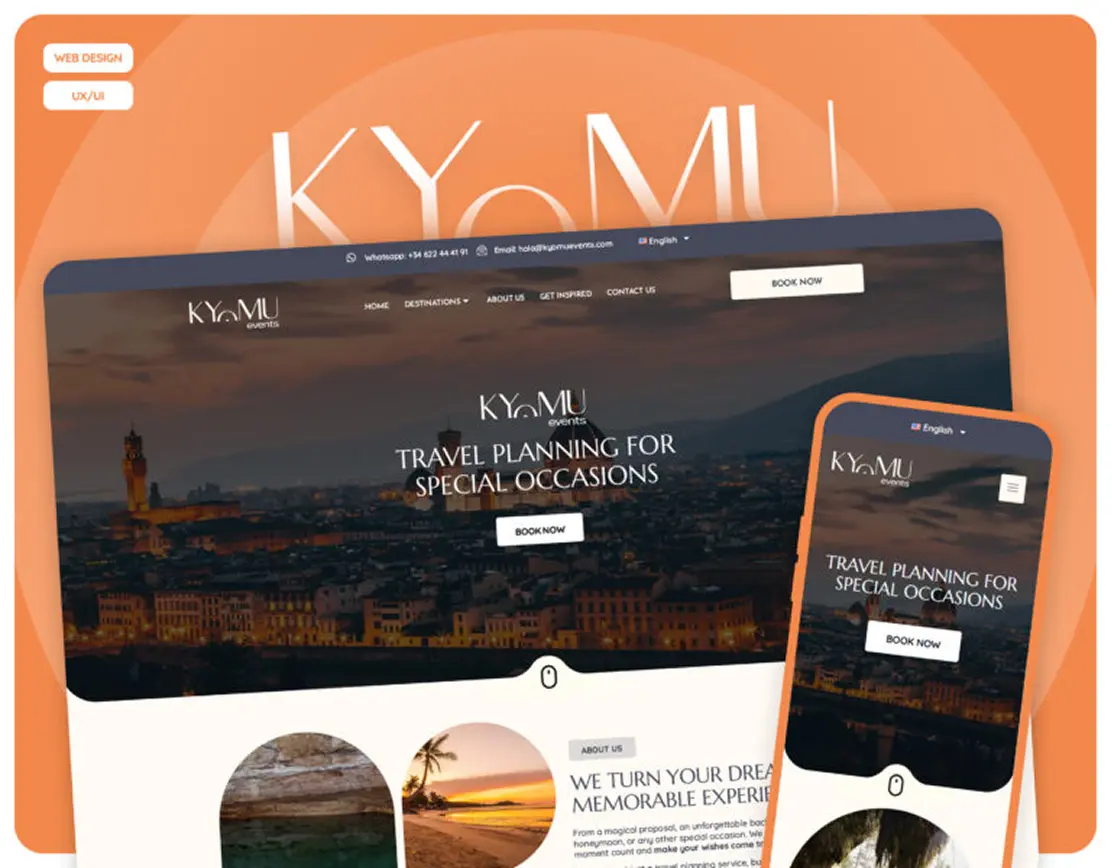
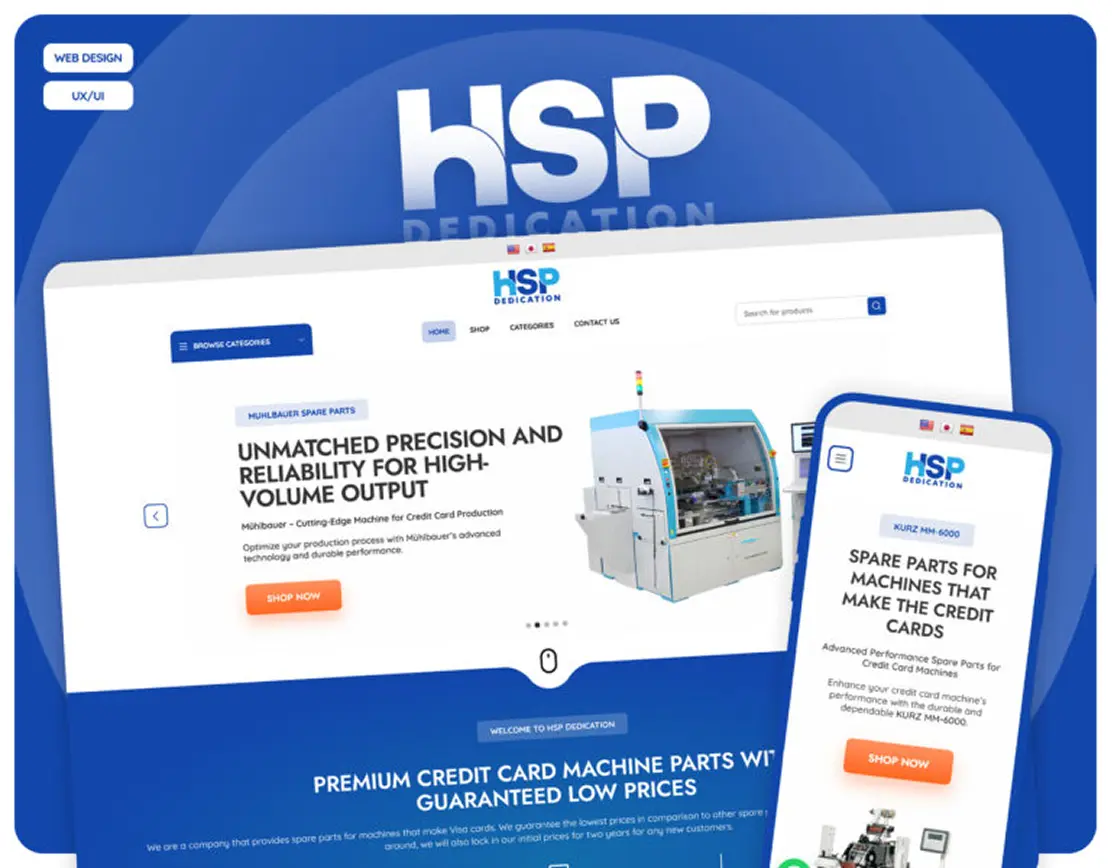
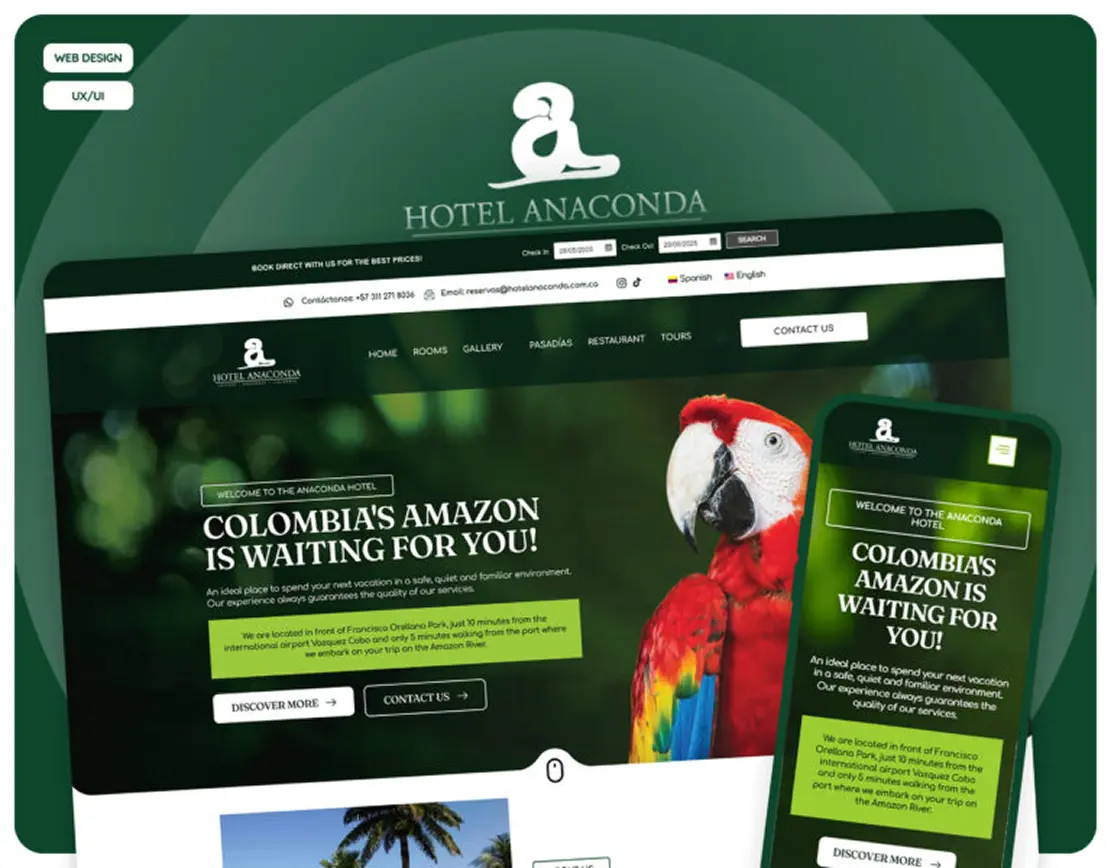

Is your store turning visits into orders, or just collecting abandoned carts?
Getting started is easier than you think
Read more about our online stores in Andorra:
WooCommerce or Shopify, customs, pricing and timelines
Creating an online store in Andorra: what nobody tells you before selling
Building the store is the easy bit. What sinks projects in the Principality is everything that happens after the buy button, and it’s exactly the part an agency in Barcelona or Madrid has never configured in its life.
If your business isn’t in the Principality, stay with us anyway: the rest of this covers product pages, checkout, and acquisition, which work the same in Andorra as in Madrid or Miami. We work with stores here and elsewhere, and the only thing that changes is the tax and logistics layer, which we fit to your situation.
Customs and shipping: you are not selling inside the European Union
Andorra belongs to neither the European Union nor its customs territory. Every parcel heading to Spain via the Riu Runer or to France via Pas de la Casa is an export, with its paperwork and its clearance. That isn’t an obstacle, it’s a design variable: you have to decide from the outset who absorbs the formalities and the destination taxes.
The most important decision is whether you ship with duties prepaid at origin or leave the customer to pay on delivery. The second option is cheaper for you and lethal for your conversion rate: nobody buys twice from a store where the courier asked for thirty euros of surprise at the door. What we do is make the total cost visible before payment, with no fine print, and configure shipping rules so the customer knows exactly what’s arriving and when.
IGI, VAT, and which tax shows up in the cart
Andorra has IGI, at a headline rate far below Spanish or French VAT. It sounds like a competitive advantage, and it is, but only if the store is built properly. The usual mistake is configuring a single tax rate for the entire catalog and every destination, and ending up with incorrect invoices and European customers paying twice.
The store has to recognize the order’s destination and apply the treatment that belongs to it, and your invoices have to be valid for your accounting and for the buyer’s. We always close this point with your accountant before launch, because every business has its own situation and templates don’t work here.
Getting paid: payment gateways and Andorran banking
This is where almost every project stalls. Several international gateways treat Andorra as non-standard territory, and configurations that activate first time in Spain simply won’t switch on here. Each Andorran bank also has its own circuit and its own timelines.
The practical consequence is that the gateway can’t be left until the end of the project. It’s the first thing to resolve, before a single product page is designed, because it constrains the platform, the payment methods you’ll be able to offer, and even the currency your prices display in. We go through it with you in the first meeting.
Which is better for your e-commerce, WooCommerce or Shopify?
We have no favorite and we take no commission on either. Here’s how we frame it:
Choose WooCommerce if you want full control over the code, if your catalog has quirks (complex variations, customer-specific pricing, integrations with your ERP or invoicing software), if content and a blog will be a meaningful part of your acquisition, or if you’d rather pay for development once than a monthly fee that keeps climbing.
Choose Shopify if you sell a relatively standard catalog, if you value never thinking about maintenance or security again, if a small non-technical team will be running it, or if you need to be selling as soon as possible with minimal friction.
In Andorra there’s a nuance that tips the scales more than you’d expect: flexibility to configure taxes, international shipping, and local gateways tends to be greater in WooCommerce. It isn’t an absolute rule, but it is a real factor we weigh case by case before recommending anything.
What makes a product page that actually sells?
In a physical shop, someone answers questions, offers alternatives, and closes the sale. Online that person doesn’t exist: their entire job falls on the product page. And most product pages are written as though the visitor is already convinced.
A page that sells answers, without being asked, the five things that stall a purchase: is this exactly what I need, will it fit me (sizes, dimensions, compatibility), when does it arrive, what does it cost in total, and what happens if I don’t love it. Add real photography from several angles, not the manufacturer’s catalog shot they’ve already seen on six other stores.
It’s also the ground where product video multiplies conversion: a product in motion and in context clears in twenty seconds the doubts that text takes three paragraphs to cover.
Why do customers abandon carts? Your online store checkout
For every ten people who add something to the cart, seven leave without paying. That’s the sector average, and it isn’t the customer’s failure: it’s the process failing.
The reasons repeat with almost boring regularity. Shipping costs that appear at the final step and break trust. Forcing account creation to buy. Endless forms. A single payment method. Zero security signals on the screen asking for card details. And a returns policy that’s hidden or nonexistent, which weighs double in an Andorran store because the Spanish buyer is already wondering what happens if something has to go back to another country.
We build the checkout in the fewest steps possible, with guest purchase, total cost visible from the cart onward, several payment methods, and return conditions written where people actually read them. Every point of friction you remove is money that was already on the table.
How do you get traffic to your online store?
A store without traffic is an expensive catalog. And ecommerce traffic gets built along three routes worth setting up from the start.
The first is organic. Well-structured categories and product pages with original content are what make your store appear when someone searches the product by name, and it’s the foundation our search optimization service works on afterward. The second is paid: with the Merchant Center feed configured properly, your products enter Google Ads and Shopping with photo and price, and from there it’s a question of profitability per product rather than luck. The third is social: advertising on social platforms is where discovery products perform best, the ones nobody is searching for but plenty of people buy on sight.
And there’s a fourth growing fast. More and more people ask ChatGPT or Perplexity for shopping recommendations directly. Those models read structured product data, reviews, and the information on your page to decide what to recommend. Preparing the catalog for that is precisely the work of our AI chat visibility service, and right now it’s almost empty ground.
Two supports worth resolving beforehand: a visual identity that signals there’s a serious company behind the store, because online buyers are buying trust above all, and consistency with the rest of your website if the store sits alongside a corporate section.
How much does an online store cost in Andorra?
We quote every project separately, and not to dodge the question: the genuine range is enormous. A store with thirty products and one shipping destination and a store with three thousand, variations, customer pricing, and ERP synchronization have nothing in common beyond the name.
What actually determines the budget:
- Catalog size and complexity: variations, attributes, bundles, and special pricing.
- The number of languages and the countries you ship to.
- Integrations: invoicing, ERP, stock management, carriers, or marketplaces.
- Whether content, photography, and descriptions already exist or have to be created from scratch.
- Tax and customs configuration, which in an Andorran project is never trivial.
We give you a fixed price after a conversation where we understand what you sell, to whom, and from where. No surprises midway and no line items appearing at the end.
How long does it take to build an e-commerce site, and what happens next?
A standard store usually goes live on a noticeably longer timeline than a corporate website, and the reason is almost never the design: it’s the catalog and the logistics. Loading a thousand products properly, with their photos, attributes, and correct tax treatment, is work that can’t be rushed without it showing up later as order errors.
And launch isn’t the finish line. Ecommerce is a living business optimized with data: which product gets viewed and never bought, which checkout step people abandon, which category never surfaces in Google. We hand over the store with analytics and conversion tracking already configured, because a store that doesn’t measure is a store that doesn’t improve. At DigiAcción we stay on after launch, which is when the interesting part begins.
Every shopping cart abandoned due to a bad experience is a sale given away to someone else.
Frequently asked questions about Ecommerce development in Andorra
¿Cuánto cuesta crear una tienda online?
Presupuestamos cada proyecto por separado porque el rango real es enorme: una tienda de treinta referencias y una de tres mil con variaciones y sincronización de stock no se parecen en nada más que en el nombre. Lo que de verdad mueve el presupuesto es el tamaño y la complejidad del catálogo, el número de idiomas y países a los que envías, las integraciones con facturación o gestión de stock, y si el contenido y las fotografías existen o hay que crearlos. Te damos precio cerrado después de entender qué vendes y a quién, sin partidas que aparecen a mitad de proyecto.
¿Cuánto se tarda en tener la tienda funcionando?
Más que una web corporativa, y el motivo casi nunca es el diseño: son el catálogo y la logística. Cargar bien mil productos con sus fotos, atributos, variaciones y fiscalidad correcta es un trabajo que no se puede acelerar sin que aparezcan errores de pedido después. Los plazos también dependen de la pasarela de pago, que conviene resolver al principio y no al final. Si tienes el catálogo ordenado en una hoja de cálculo y las fotos listas, el proyecto vuela.
¿Cuántos productos necesito para que una tienda online tenga sentido?
Menos de los que crees. Hemos visto tiendas de seis referencias facturar más que catálogos de dos mil, porque lo que decide no es el número sino el margen, la recurrencia y lo fácil que sea explicar el producto. Un catálogo enorme sin estrategia es una carga de mantenimiento: mil fichas que actualizar, mil fotos y mil descripciones. Si estás empezando, arranca con tu gama fuerte y amplía con datos en la mano, no por intuición.
¿Qué métodos de pago se pueden integrar en la tienda?
Los habituales: tarjeta, transferencia, contra reembolso, Bizum donde aplique y financiación si tu sector lo pide. La decisión técnica que importa es qué pasarela usar, y es lo primero que resolvemos, no lo último. Algunas pasarelas internacionales tratan a Andorra como territorio no estándar, y configuraciones que se activan a la primera en España aquí necesitan otro camino. Por eso lo vemos contigo en la primera reunión: condiciona la plataforma, los métodos que podrás ofrecer y hasta la moneda en que muestras los precios.
¿Podré gestionar yo los productos, los pedidos y el stock?
Sí, y es parte del encargo. Te entregamos la tienda con formación en vídeo y una sesión en directo para que sepas dar de alta un producto, cambiar precios, gestionar pedidos, emitir devoluciones y consultar el stock sin depender de nadie. También te dejamos documentado tu propio procedimiento, adaptado a cómo trabajas. Si prefieres delegar la gestión diaria, podemos encargarnos nosotros, pero queremos que sea una decisión tuya y no una necesidad.
¿Se puede conectar la tienda con mi programa de facturación o de stock?
Sí, y suele ser lo que más horas ahorra. Podemos sincronizar el stock para que no vendas lo que no tienes, generar facturas automáticamente al confirmar un pedido, conectar con tu ERP o tu programa de gestión y volcar los pedidos donde tu equipo los trabaja de verdad. Lo que hacemos antes de desarrollar nada es mirar qué tarea os está comiendo más tiempo cada semana: si la integración la resuelve, la montamos; si no compensa, te lo decimos y nos ahorramos los dos un desarrollo que no rinde.
¿Se puede migrar mi tienda actual sin perder el posicionamiento?
Sí, y se hace siempre así. Una migración bien ejecutada conserva íntegro el trabajo que llevas años acumulando en Google. El proceso incluye inventariar todas las URLs actuales, mapear cada producto y cada categoría a su equivalente nuevo, montar las redirecciones 301 una a una, conservar los textos que ya posicionan y vigilar la indexación durante las semanas siguientes. Lo que nunca se hace es cambiar la estructura de URLs sin mapa de redirecciones. Antes de tocar nada auditamos tu tienda y te decimos qué conviene conservar tal cual.
¿Es mejor vender en mi propia tienda o en Amazon y otros marketplaces?
No son excluyentes, y la respuesta madura suele ser las dos. El marketplace te da volumen desde el primer día, pero te cobra comisión, te oculta quién es tu cliente y puede dejar de mostrarte cuando quiera. Tu tienda propia arranca más lenta y te deja el margen íntegro, la base de datos de clientes y la marca. La estrategia que mejor funciona es usar el marketplace para descubrimiento y volumen, y trabajar la tienda propia como el activo que sí es tuyo. Podemos sincronizar el catálogo entre ambos para que no lleves dos inventarios a mano.
¿Qué agencia de ecommerce me recomiendas en Andorra?
Pide tres cosas antes de firmar con nadie. Que te enseñen tiendas publicadas hace más de un año y comprueba si venden, no solo si son bonitas. Que te confirmen por escrito que los accesos y la propiedad de la tienda son tuyos. Y que te expliquen cómo van a resolver la pasarela de pago, porque es el cuello de botella real de cualquier proyecto andorrano. DigiAcción trabaja desde La Massana, monta tanto WooCommerce como Shopify sin casarse con ninguna, y puede encargarse después del posicionamiento y de las campañas que traen tráfico a la tienda. Valoración de cinco estrellas en Google.
Related services
Focused on quality over quantity, we work together to take your digital presence to the next level.

Gyms & Fitness Studios

Clinics and Health

Consultancies and administrative agencies

Web design for architects and interior designers

Web design for restaurants and the hospitality industry

Digital marketing agency for lawyers

Fashion & Clothing Brands

Lawyers

Vacation Rentals

MSPs & IT Companies
Ready to sell online?
Tell us about your project. In less than 24 hours, Jesús, CEO of DigiAcción, will analyze your situation and tell you exactly what kind of store you need and what it can generate in revenue, at no cost and with no obligation.
Chat via WhatsApp
If you prefer something more direct, write to us on WhatsApp. We’ll reply right away.
5.0
+ 23 Google reviews
Or fill out the following form