


Restaurant website design and marketing agency for bars, cafes and hospitality
Restaurant websites with online ordering, reservations, QR menus and local SEO
Websites that whet the appetite and fill tables
A QR code menu with allergens, table booking and online ordering on your own website, a Google Business Profile that works, and ads on Google and social media. For restaurants, bars and cafes in any country.
 Ascuawood-fire grillBook a TableFire won't be rushed. Neither will we.LunchDinnerToday, 2:00 pm, 2 guestsFind a TableOpen the demo
- Table booking up front
- Digital menu with allergens
- Starting at€1,500paid once, with no monthly fees or fine print
- Pre-design in1 weekor so, sometimes even sooner
- Before you pay anything2 or 3clickable pre-designs, free if you meet the requirements
- Google5.0average rating from 24+ reviews
Restaurant web design that turns searches into bookings
People look at a restaurant website hungry, in a hurry and almost always on their phone. It has to show the menu, the atmosphere and the Book button within two taps, and make booking with you easier than booking through any app.
QR code menu and digital menu for restaurants
Your menu on your website, not in a PDF: dishes, prices and allergens that read well on a phone and that Google understands. The QR menu on your tables points to the same page, so you change a price once and it updates everywhere.
Restaurant branding and logo design
Your name, your colors and your way of cooking, so the website, the menu and the storefront tell the same story. If you don't have a logo or brand identity yet, our graphic design team creates it.
Cafe, bar and pub website design
A tapas bar sells atmosphere and opening hours; a pizzeria, takeout. Cafe website design puts breakfasts and the patio first. We also design websites for gastropubs, bakeries, ice cream shops, food trucks and caterers.
An allergen menu on every dish
Every dish shows its allergens with icons and words, and guests can filter the menu to see only what they can eat. Fewer doubts at the table and more peace of mind for anyone with an allergy. When a recipe changes, you update it in one place.
Restaurant SEO and Google Business Profile
Google Business Profile for restaurants done right: complete details, answered reviews and a website that confirms what your profile says, so you show up when someone searches for a place to eat nearby. We handle it with our SEO service.
An online menu you update yourself
Your restaurant menu online is always current: change the lunch menu, mark a dish as sold out or upload a photo of today's special from a simple dashboard, without calling anyone. The website is yours and you run it, on WordPress.
See what your restaurant website could look like
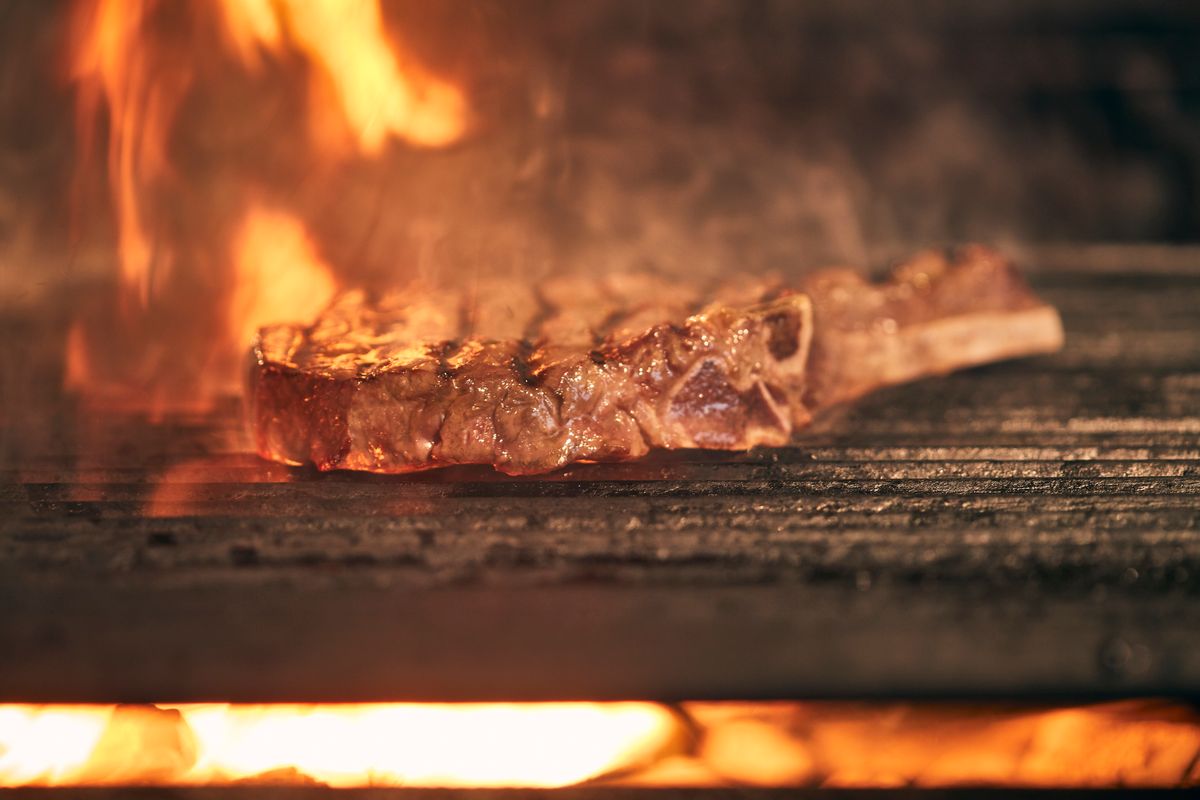
Ascua is a fictional brand we designed so you can see how we work: full-screen video of the grill, a featured menu and table booking always within reach. Go in and look around the way your guests would.
AscuaFire won't be rushed. Neither will we.Find a Table
Live demo
Open the demo
Restaurant photography and dish pages that make guests hungry
On a restaurant website, the photo of the dish does the server's job: it sells before the guest sits down. That's why every signature dish gets its own page, with a good photo, what's in it and its allergens, and the Book button always close at hand.
- 1
Restaurant video marketing and real photos of your dining room
Photos that make people hungry and video of the kitchen or the dining room. If you need new footage, count on our video production service.
- 2
Restaurant menu design for phones, not PDFs
Short sections, large type, clear prices and the dishes you want to sell at the top. A menu designed to be read with one thumb, not pinched and zoomed.
- 3
Order and book buttons on every dish
The Book button opens your reservation system and the order button adds the dish to a pickup order. Anyone who hesitates can message you on WhatsApp with the dish already typed in.
Restaurant reservation system: online booking on your own website
Your tables, seatings and hours already live in your restaurant booking system or in a notebook by the phone. A good online reservation system for restaurants lets guests book from your website, day or night, and sends the booking straight to you, with no middleman.
- A Book button on the homepage, on every dish and pinned on mobile.
- A confirmation and a reminder for the guest, if your system supports it, so fewer tables sit empty.
- It can be connected depending on the reservation software you use, and we confirm it on every project.
How to reduce restaurant no-shows
A no-show is a booking that never arrives and never calls. It hurts twice: the table stays empty and you may have turned someone else away. Simple things work: confirm by text or email the day before, ask for a phone number when booking, make canceling easy from the reminder itself and, for large groups or busy dates, take a deposit if your booking system allows it.
Online ordering for restaurants without delivery app commissions
Delivery apps bring visibility, but every order that comes through them pays a commission and the customer stays on the app. A restaurant ordering system on your own website lets guests who already know you order pickup or delivery directly from you. If you also want to sell products, we build the online store with WooCommerce or Shopify.
Restaurant advertising and social media marketing
People deciding where to eat check Google, Google Maps and Instagram, so restaurant ads and restaurant social media marketing work best together. With Google Ads you show up when someone searches for restaurants in your area, and with Meta Ads you reach people who live, work or stay nearby. And every ad leads to a website that turns the visit into a booking.
Restaurant website design services in four steps, with a mockup first
No signing blind. Before we build anything, you see your restaurant's website working, click through it on your phone and decide.
Free consultation
A call or video call with Jesús, CEO of DigiAcción. We look at your current website if you have one, your Google profile, how bookings and orders reach you today and what you want to achieve. Free, with no commitment, if you qualify.
- What sets us apart
Clickable mockup in about a week
In about a week, sometimes sooner, you get 2 or 3 clickable pre-designs. You browse them like the real website, before you pay anything (free if you meet the requirements).
Fixed quote and schedule
Once you pick a pre-design, you get a fixed quote and a delivery schedule based on the scope. No surprise line items halfway through.
Build and launch with your digital menu
We build the website with your digital menu, allergens, table booking and technical SEO, and connect it to your software when possible. Then we show you how to change dishes, prices and photos.
This is what a pre-design looks like: click around the way your guests would.
How much does a restaurant website cost? From €1,500, one payment
Many restaurant websites are tied to a monthly subscription or to a booking platform. We work with a single payment for the design: no monthly fees and no fine print.
What the final price depends on
- The number of pages and menus: food, wine, prix fixe and events
- The table booking and online ordering you want to connect
- How many languages the site needs
- Sections like private events, groups or an online store
What you always get
- A free first consultation with no commitment, if you qualify
- 2 or 3 clickable pre-designs, free if you meet the requirements
- A fixed quote and schedule once you approve the pre-design
- If you don't have a brand identity yet, we create it
Restaurant website design from
€1,500
paid once
You get the fixed quote after reviewing the pre-designs.
What our clients say about working with us
They designed the website I had in mind, and they're helping me a lot with lead generation. DigiAcción is amazing!
Working with DigiAcción has been a unique experience. The results have been exceptional in every way. A 10 out of 10.
Quim GrasTEP Assessors We're very happy with Digiacción's professionalism and service. From day one, they've been ready to help us. The results speak for themselves.
Lydia MartinezAbogados MS We've worked on several projects with Digiacción, and it's truly a pleasure and a privilege. They're honest, hardworking and, above all, very good at what they do.
PolCEO, Joira Software Professional, creative and focused on results. DigiAcción is helping us establish our brand as a leader in professional debt relief consulting services.
Jordi A.Debt relief consulting Jesús, the founder of DigiAcción, is passionate about his work. We've worked together on several projects, and it's amazing to work with him.
DanielEntrepreneur (CEO, Ads&Law) I'm Carelys, Head of Marketing at ILLAY Legal. We've been working with DigiAcción, a digital marketing agency in Andorra that handles our SEO, our content and our YouTube channels, for about a year now, and our rating couldn't be higher. They're professional and, above all, honest: they tell you what works and what doesn't, without overselling. When a problem comes up, they don't just point it out, they show up with the solution ready. They get far more involved in the project than you'd expect from an outside agency, and you can see it in the day-to-day work and in the results. Highly recommended.
CarelysHead of Marketing at ILLAY Legal Working with DigiAcción was a very pleasant surprise, exquisite attention, fast execution, perfect web design they quickly understood the concept of my project. Thanks a million
Turispad S.L.Web design They designed my website from scratch with exquisite speed and taste. Discovering DigiAcción is well worth it, don't think twice and get in touch with them. Thank you so much
Selecta IconicWeb design Working with DigiAcción has been an excellent experience. We hired them to develop our website and the whole project we had in mind, and they managed to bring it to life exactly as we had imagined it. They answered every question we had right away, always with professionalism and a personal touch. The process was smooth, clear and very easy. If anyone asked us whether we'd work with them again, we'd do it without hesitation. Thanks!!
Jamie O.Web development DigiAcción completely transformed my online business in Andorra. Their web design team created an attractive website that perfectly reflects our brand identity. On top of that, their SEO strategies have significantly improved our search engine rankings, bringing in much more organic traffic. I'll definitely contact them again for future projects.
Sergio DíazWeb design and SEO I don't usually write reviews, but with DigiAcción I definitely had to. It's the best web design agency in Andorra. They also worked on my organic SEO, and the results have been INCREDIBLE.
Khaleb Angarita SalcedoWeb design and SEO It's been a pleasure working with DigiAcción, this digital marketing agency is on par with the best. And I've worked with quite a few, thank you for your work and professionalism. We'll be back!
Gerard LlachDigital marketing Top SEO agency in Andorra. I've been working with them on several digital marketing projects for a while, and they're very good professionals
Aitor RuizFounder of GetALink Delighted to work with Jesús, Dani and their team. Very serious and professional. Friendly service and a very efficient strategy. Highly recommended!!!!
Jordi LlachDigital marketing strategy
As featured in











Read more about restaurant websites and marketing
Restaurant marketing, advertising, SEO, digital menus, reservations, ordering and branding
Restaurant marketing agency: what it does and when to hire one
A restaurant marketing agency helps a restaurant get found, chosen and visited again: it builds or improves the website, works on local SEO and the Google Business Profile, runs ads on Google and social media, and shows with data which actions bring in bookings. Restaurant marketing is not about collecting followers; it is about filling tables on the nights you need them.
Today that path runs through a phone. Someone sees your dish on Instagram, looks you up on Google Maps, reads three reviews, opens your website and books. If one step fails, they end up at the place next door. That is why good restaurant marketing services work as one circuit, not as a pile of loose tactics:
- The website, with a text menu, allergens and a Book button that is always visible.
- The Google Business Profile and reviews, which decide more visits than most owners think.
- Advertising on Google and social media, aimed at the seatings you want to fill.
- Measurement: knowing where every booking comes from.
Whether you call it a restaurant marketing company, a restaurant marketing firm, a consultant or a restaurant PR agency, ask before you hire: will they talk about bookings rather than likes, and will the website, ad accounts and data stay in your name? Searching for a restaurant marketing agency near me feels reassuring, but most of the work happens online. We work remotely with businesses in Spain and other countries.
Restaurant marketing strategies and a simple marketing plan
A restaurant marketing plan does not need fifty pages. It needs clear answers to four questions, reviewed every season:
- Which seatings do you want to fill? A Saturday waitlist and a quiet Tuesday lunch need different fixes.
- Who do you want to attract? Neighbors, nearby offices, tourists, groups or companies.
- What makes you different, said in one sentence a passerby understands.
- Which channel does each job, and how much you will invest in each one.
Once that is clear, restaurant marketing ideas stop being random: a lunch menu for nearby offices or a holiday party page published before companies start booking. The best restaurant marketing strategies are boring on purpose: a few things done well and kept up.
Restaurant digital marketing agency or an in-house team?
Restaurant digital marketing covers the website, search, social media, ads and email. A small restaurant rarely needs a full-time marketer: the owner or a manager can post on social media and answer reviews, while a digital marketing agency for restaurants handles what takes technical skill, such as the website, SEO and paid campaigns. At DigiAcción you can hire just the website, just the marketing, or both.
Hospitality marketing for restaurants, bars and cafes
Hospitality marketing has an advantage over almost any other industry: what you sell can be photographed, smelled from the street and shared at the table. A hospitality marketing agency builds on that: a restaurant, bar or cafe sells moments that people decide on in minutes, often on their phone and often hungry.
That changes how hospitality digital marketing should work:
- Speed beats polish. A guest deciding where to eat tonight wants the menu, the hours and a Book button, not an animated intro.
- Local beats global. Most guests live a few miles away or are staying nearby, so maps, reviews and local ads matter more than reach.
- Repeat visits are the real profit. Bringing a happy guest back is usually easier than finding a new one.
A good hospitality digital marketing agency understands seatings and seasons, not just impressions, and its hospitality social media marketing always points to the booking page.
Food and beverage marketing agency
Food and beverage marketing goes beyond restaurants: bakeries with wholesale clients, wineries with tasting rooms, breweries, caterers and local producers. A food and beverage marketing agency should know how each one sells. A winery needs tasting bookings and wine club sign-ups; a caterer needs quote requests; a bakery needs pre-orders for cakes.
Marketing for cafes, coffee shops, bars, pubs, food trucks and wineries
Each business has its moment. Coffee shop marketing and cafe marketing work in the morning: coffee shop social media marketing lives on breakfast photos, with the opening hours in plain view. Bar marketing and pub marketing peak before the weekend: events, game nights and happy hour. Food truck marketing lives on social media because the location changes, so post where you will be today. Winery marketing sells an experience, so a winery marketing agency puts tasting bookings and events first. Catering marketing needs menus and quote requests; bakery marketing, pre-orders; pizza marketing, takeout. For nightclubs and breweries, events and social media carry most of the weight.
Restaurant advertising: Google Ads, Facebook ads and Instagram
How do restaurants advertise today? The ads that work best show up at the right moment: when someone searches for a place to eat nearby, when they are planning Saturday dinner or when they walk past hungry. Three channels are worth knowing:
- Google Ads for restaurants: ads on Google and Google Maps for searches like "steakhouse near me" or "brunch downtown". This is intent advertising: it reaches people who already want to eat. We run it with our Google Ads service.
- Facebook ads for restaurants and their Instagram version: ads that show your dishes to people who live, work or stay nearby. This is desire advertising: it creates the craving. We help you with Meta Ads.
- Your own guest list: email and text messages to people who have already been in.
If you are wondering how to advertise a restaurant on a small budget, start with restaurant PPC aimed at the seatings you want to fill, and measure the cost per booking, not per click. The ad is only half the job: if the click lands on a slow website with a PDF menu and no Book button, you paid for a visit you lose.
Social media for restaurants: what to post and who should run it
Instagram is a restaurant's shop window: many guests decide from the photos before they look at the menu. What works is what looks real: a dish leaving the pass, the grill, the team, a full dining room. Restaurant social media ideas that rarely fail: the dish of the week, a short prep video, the story behind a supplier. Restaurant influencer marketing can help with an opening if the creator's audience is local. Restaurant social media management, the day-to-day side of social media marketing for restaurants, means posting consistently and sending people to book, not posting every day. If you have no time, a restaurant social media agency can take over, but nobody tells your kitchen's story better than you.
Restaurant promotions, loyalty programs, email and SMS marketing
Restaurant promotions work when they fill a gap without giving away your margin, and the best restaurant promotion ideas are simple. A free starter for guests who book on your website, a group menu on weeknights or a tasting in the slow season beats a blanket discount. A restaurant loyalty program does not need an app: a list of guests who booked online and a good reason to write to them is enough to start. Restaurant email marketing works when you have something to say, like a seasonal menu or an event, and restaurant SMS marketing works for last-minute openings. And if you want to know how to increase restaurant sales without cutting prices, look at the average check: a clear wine list and desserts shown in photos raise the bill without pushing anyone.
Restaurant advertisement calendar: campaign ideas for every season
A restaurant marketing strategy pays off when it follows the calendar. Every season has its big dates and its slow weeks, and a campaign put together the same week is already late. A starting calendar (in the Southern Hemisphere, flip the seasons):
- Winter: Valentine's Day, comfort food and weeknight campaigns if January and February are your slowest months.
- Spring: graduations, Mother's Day and family celebrations, with a group menu page and a quote form published weeks ahead.
- Summer: summer hours and vacation closures kept current on Google and on your website, plus takeout for hot evenings.
- Fall: the seasonal menu and set menus for the holidays and New Year's Eve, announced to your guest list before the dates fill up.
Each restaurant advertisement works better with its own page on your website, its own ad on Google or social media and a way to count the bookings it brings in. In digital marketing for restaurants, measuring every campaign is what turns a handful of ideas into a plan that gets better every year.
Restaurant SEO: local SEO, Google Maps and AI answers
Local SEO for restaurants is the work of making your restaurant appear on Google, on Google Maps and in AI chat answers when someone searches for a place to eat. Almost all of it is local: someone searching for "italian restaurant" wants one nearby, and Google shows a map with three restaurants first. Being in that map is worth more than any other position.
What weighs most:
- A complete Google Business Profile: the right primary category, real hours (holidays included), recent photos, the menu and a booking link.
- The same name, address and phone number on your website, your profile, your social media and directories.
- Reviews that are frequent, recent and answered.
- A fast mobile website with a text menu, so Google understands what you cook and can show your dishes.
- Useful pages: lunch menu, groups, private events and directions.
Restaurant website SEO also covers the technical side: page speed, structured data for your menu and hours, and one address per language if you serve tourists. AI chats such as ChatGPT or Google's AI Mode also recommend restaurants, and they rely on profiles, reviews and websites that say clearly what you cook, where and at what price. Hospitality SEO works the same way: winery SEO leans on tasting pages, catering SEO on quote pages. Whether you hire a restaurant SEO agency or a freelancer for restaurant SEO services, ask what will change in the first month. We do this with our SEO service and our AI search optimization (GEO).
Restaurant reputation management and Google reviews
Reviews are today's word of mouth, and they also count for local SEO. Restaurant reputation management comes down to three habits:
- Ask for a review at the end of a good experience, with a link or a QR code on the check.
- Answer every review, the bad ones calmly and offering to talk in private.
- Listen for patterns: if several reviews complain about the wait, the review is not the problem.
Restaurant review management also means keeping your profile current with photos, hours and posts: what many owners still call Google My Business for restaurants is now Google Business Profile, and it is often the first thing a guest sees.
What makes a good restaurant website
A restaurant website gets visited hungry, in a hurry and on a phone. Guests want four answers: what is on the menu, what it costs, where you are and whether there is a table. If they find them in two taps, they book; if not, they go back to Google and pick someone else. This restaurant website checklist covers the features that cannot be missing:
- A sticky Book button, visible from the first screen and on every page.
- A text menu, not a PDF: readable on a phone, with prices, photos of the signature dishes and allergens.
- Hours, address, map and phone number where they are easy to find, with closing days and holidays.
- Real photos of the dining room, the kitchen and the food. Stock photos cost you trust.
- A page for every reason to visit: lunch, groups, private events, the patio or takeout. Each one works as a restaurant landing page for ads and search.
- Speed: a slow restaurant website loses guests before it shows the first dish.
A good restaurant website also has to work for you: changing a price or posting the lunch menu should take a minute. See how we solve it in the Ascua demo, a fictional wood-fired grill restaurant.
Best restaurant websites: what they have in common
Look at restaurant website examples from fine dining to pizza by the slice and the best restaurant websites share little in style and a lot in substance: they go straight to what the guest wants, show real food photography and never hide the booking behind animations. For restaurant website design inspiration, use one test: how many taps does it take to see the menu or book on a phone? The best restaurant website design passes it and still feels like your restaurant.
Restaurant website templates and builders: when they are enough
Restaurant website templates, a WordPress restaurant theme or a builder like Wix or Squarespace can be enough to start. There are even free plans and free online ordering systems for restaurants. The trade-off: your design looks like many others, your menu and bookings may live on someone else's platform, and ranking on Google takes more work. Instead of hunting for the best restaurant website builder, decide what you need to own: your domain, your guest list and your menu pages. If owning them matters, a custom website makes more sense.
Digital menus and QR code menus for restaurants
If your menu only exists on paper, it does not exist for Google. A digital menu fixes that and lets guests see your dishes before they arrive. The important difference is not paper versus QR, but a real digital menu versus a PDF behind a QR code:
- A PDF makes people zoom, loads slowly, cannot be filtered and Google barely reads it.
- A digital menu on your website reads well on a phone, is organized by section, shows photos and allergens, and every dish can appear in Google.
A QR code menu for restaurants is only the door; what matters is what it opens. Put the menu QR code on the tables and at the entrance, and make it point to your website, not to a third-party platform. Any QR code menu generator can create the code; the real work is the page behind it. That way, when you change a price, it changes everywhere.
How to create a digital menu
You can build a digital menu with a restaurant menu maker app or inside your own website. Apps are fast, but the menu lives on their domain and does not help your SEO. A restaurant menu template is a good starting point if you adapt it to your brand. To make it work:
- Group the menu the way people order: starters, mains, desserts, drinks and set menus.
- Add photos to your best sellers and to the dishes you want to sell more of.
- Mark allergens and vegetarian or gluten-free options.
- Create a QR code that points to the menu on your website and test it on several phones before printing it.
Restaurant reservation software and booking on your own website
An online reservation is a table that gets booked while you sleep. The guest picks the date, time and party size on your website, and you see it in your reservation book. You do not depend on someone picking up the phone in the middle of service, and the guest's contact details stay with you.
Booking platforms bring visibility, especially to a new restaurant. What you should check in your contract is how they charge you and for what, because it changes by plan and by country. Many restaurants combine both: the platform to be discovered, and a restaurant reservation website of their own for guests who already know them.
When you choose restaurant reservation software or a restaurant table booking system, check that it:
- Fits into your website with your design, not as a foreign pop-up.
- Handles seatings, areas (dining room, patio, private room) and groups.
- Sends the guest a confirmation and a reminder.
- Can connect to your POS if you need it.
There is no single best restaurant reservation system: a free restaurant reservation system can be enough for a small place, while a busy dining room needs more control. We do not recommend brands, because every restaurant works differently. Booking can be connected depending on the software you use, and we confirm it on every project.
An online ordering website or app for your restaurant
Delivery apps are a powerful shop window, but every order that comes through them pays a fee and the customer belongs to the platform, not to you. The answer is usually not to leave them, but to open your own channel for guests who already know you.
An online food ordering system on your website works like a small store: the guest picks dishes, extras and a pickup or delivery time, and the order reaches your kitchen. You have three main options:
- Ordering on your own website, with the menu, extras and pickup times. We build it as an online store with WooCommerce or Shopify, or connect the online ordering software you already use, when possible.
- An online ordering platform for restaurants embedded in your site: quick to set up, although the platform's terms set the rules.
- Your own restaurant mobile app: restaurant app development only makes sense with high volume and very loyal customers, because few people install an app for a single restaurant.
For most places, a fast online ordering website does the job of an online ordering app for restaurants: it works on any phone and nobody has to install anything. To get guests to order directly instead of through a restaurant delivery app, give them something only direct orders get, like a free dessert or no wait at pickup, and say so on the bag and on your Google profile.
Food photography and video for restaurants
People eat with their eyes first, and online they only eat with their eyes. Restaurant food photography shows dishes in a way that makes people hungry: natural or well-handled light, the dish at its best and the context of your dining room.
The photos a restaurant website needs:
- Signature dishes and the ones you want to sell more of.
- The dining room, the patio and the bar, at the hour they fill up.
- The kitchen and the team: people want to know who cooks.
- The details: raw ingredients, the grill, the wine, the dessert everyone shares.
A professional food photographer makes the difference, and you can start with ten good photos. Video, even a short clip, works even better on the homepage and on social media. If you need new footage, count on our video production service.
Restaurant branding: names, logo and brand identity
The brand comes before the website. Restaurant branding is everything that makes people recognize and remember you: the name, the logo, the colors, the menu, the tone you speak in and even the tableware. A consistent brand identity makes the storefront, the website and Instagram tell the same story.
If you already have a brand, the website has to respect it, not invent a new one. And if you do not have a logo or brand identity yet, our graphic design team creates it, so you do not need a separate restaurant branding agency. And since a restaurant's image does not end on the screen, we also design your business cards with the same logo and colors as your website and menu.
Restaurant names: how to choose one guests can find
Lists of restaurant names give you ideas, but a good name works on the street and online. Before you decide, check that:
- It is easy to say and spell, for foreign guests too.
- It cannot be confused with another restaurant in your city.
- The domain and the social media handles are available.
A very generic name like "The Grill House" is hard to rank: it competes with every grill house in the country. A distinctive one, like Ascua, means that anyone searching for you finds you.
Restaurant logo: what works on a sign, a menu and a phone
A restaurant logo has to work in very different places: a sign you read from across the street, the tiny Instagram icon, the menu and the receipt. The logos that work best are simple, readable at small sizes and available in a single color. Avoid fine details that disappear on a phone.
Website design for cafes, bakeries, breweries, food trucks and catering
Food website design is not one-size-fits-all. A chef-driven restaurant sells the experience; a lunch spot sells speed and price; a seafood place or a steakhouse sells the product. Good hospitality website design starts by asking what each food business website needs to sell first:
- Pizzerias, burger joints and fast food restaurants: a short menu, photos that make you hungry and takeout in one tap.
- Bakeries and coffee shops: hours, location, pre-orders and custom cakes. The best bakery website examples put the order form right next to the photos. Cafe web design and coffee shop web design follow the same logic, with breakfast and opening hours up top.
- Breweries and wineries: tastings, tours, events and a shop for bottles or merchandise.
- Food trucks, caterers, cloud kitchens and nightclubs: menus, quote requests, an event calendar, guest lists and online ordering.
- Indian, Chinese, Mexican or any regional cuisine: a clear menu with descriptions for first-timers and easy ordering.
In every case, food and beverage website design that works puts what the guest is looking for first. And if you also rent rooms or cabins, see our hotel website design and vacation rental website design pages.
Franchise and restaurant group website design
A restaurant group or a franchise needs a website that organizes several locations without losing the personality of each one: a page per location with its menu, hours and booking, plus a shared brand that ties them together. Franchise website design adds one challenge: each location should rank in its own city without competing with the others, so every location page needs its own address, photos and reviews.
How to choose a restaurant website design company
Whether you hire a restaurant website designer, a freelance developer or a restaurant website design agency, ask for the same things:
- Restaurant work you can click through, not just screenshots.
- A fixed price and what it covers, before you sign.
- Ownership: domain, hosting and website in your name.
- A way to update the menu yourself, without paying for every change.
- A preview before the build: we show you 2 or 3 clickable pre-designs in about a week, before you pay anything (free if you meet the requirements).
Restaurant website development is the easy part; the hard part is understanding how your restaurant sells. Our restaurant websites start at €1,500, paid once, with no monthly fees.
Websites for restaurants: how to redesign yours without losing bookings
Many websites for restaurants were built in a rush before opening and never touched again: a menu from two seasons ago, winter hours in the middle of August and a booking link nobody can find. A redesign should be planned so nothing gets lost along the way:
- Printed QR codes on tables, menus and the front window have to keep working: the old menu URL redirects to the new one.
- The links on your Google Business Profile (website, menu and booking) get updated the same day the new site goes live.
- Bookings and orders are tested end to end before the switch, with one real booking and one real order.
- Timing: launch in the slow season or midweek, not on the Friday before a long weekend.
If you're talking to a restaurant web design company, ask who handles that migration, along with the questions about ownership and menu updates above. Good food web design keeps the menu, the hours and the Book button working on the first day of the new site, and every day after that.
Frequently asked questions about restaurant marketing and websites
Our restaurant websites start at €1,500, paid once, with no monthly fees or fine print. The final price depends on the number of pages and languages and on whether you want table booking or online ordering connected. Before you pay anything, you see 2 or 3 clickable pre-designs, and once you pick one you get a fixed quote.
It can be, if that money buys a custom website you own and not a template rented by the month. Compare what each quote covers: design, a mobile menu, booking and ordering, technical SEO, and whose name the domain and hosting are in. Ours start at €1,500, paid once, with the domain and hosting in your name, and you see clickable pre-designs before you pay anything.
DoorDash, Uber Eats and other delivery apps charge restaurants a fee on each order placed through them. The rate depends on the plan you choose and on whether the order is for delivery or pickup, and it can change by city or country, so the exact figure is in your contract and on the platform's current pricing page. Many restaurants keep the apps for visibility and also take direct orders on their own website for guests who already know them.
Most restaurants run on a point of sale (POS) system for orders and payments, plus reservation software, an online ordering system and often one or more delivery apps. Many also use a tool for the digital menu and another for email or text messages. The website is what ties them together: it should show the menu, take bookings and orders, and send guests to the right place without making them leave your brand.
Hospitality marketing is the marketing of businesses that host guests, such as restaurants, bars, cafes and hotels. It aims to fill tables or rooms and bring guests back, using the website, the Google profile, reviews, social media, ads and the guest list. In restaurants, it is mostly local and decided on a phone, often within minutes.
Start where people look for you: a complete Google Business Profile, a clear website with the menu and a Book button, and Instagram with real photos. Then give a specific reason to come, like a dish only you make, a lunch menu or an event, and advertise it on Google and social media to people in your area. And do not forget past guests: a message about the new seasonal menu brings many of them back.
There is no single figure: it depends on whether you are opening or already established, how much competition you have and which seatings you want to fill. Start with what costs little, like your Google profile, your website and your reviews, then add paid ads for specific goals and measure the cost per booking. We do not quote a marketing fee without knowing your case, but the first consultation is free if you qualify.
You can do it yourself with a website builder or hire a designer. Either way, first gather what guests look for: the menu as text, real photos, hours, address and a booking or ordering method, and make sure all of it works on a phone. If you hire us, you start with a consultation and see 2 or 3 clickable pre-designs in about a week, before you pay anything (both free if you meet the requirements).
To make the business show up when people nearby search for what it sells, on Google, on Google Maps and in AI answers, and to turn that search into a visit, a booking or an order. For a food business, that means a text menu Google can read, consistent contact details and a Google profile with fresh reviews. It is the most lasting way to get guests without paying for every click.
Create or claim your restaurant's Google Business Profile, verify it and choose the right primary category. Fill in hours, photos, the menu, the phone number and links to your website and booking, with the same details as on your website. Then get reviews and answer them: it is what helps you climb the map the most.
Yes, even if you are on Instagram and on booking or delivery apps. Your website is the only place where you control the menu, the prices, the photos and the booking, and it is what Google and AI chats check to confirm your details. It is also where guests can book or order directly with you, with no middleman.
There is no single best system for every restaurant: the right one takes orders on your own website under your brand, fits your menu (extras, pickup times, delivery areas) and sends orders straight to the kitchen or the POS. Check how each one charges in its current terms and who keeps the customer data. We do not recommend brands: we build ordering into your website with WooCommerce or Shopify, or connect the system you already use when possible.
Let your next table be booked on your own website
Tell us how you work, and we'll show you what your restaurant's website could look like. In about a week, you could be clicking through your pre-design.
Free first consultation, no strings attached (if you qualify). Prefer WhatsApp? Message us today.
Related services
We build custom websites for every kind of business. See how we work in other industries.
- Hotel website design
- Vacation rental website design
- Gym and fitness website design
- Web design for consulting and management firms
- Web design for lawyers and law firms
- Digital marketing agency for lawyers
- Web design for architects and interior designers
- Web design for clinics and healthcare
- Real estate website design
- Contractor website design
- Auto repair website design
- Veterinary website design
- Website design for IT companies
- Fashion website design
Want to grow your brand?
Discover all our digital marketing services.
Ready for the website your restaurant deserves?
Tell us how you work and what you need. Jesús, CEO of DigiAcción, will review your current website (or your starting point) and tell you what your restaurant needs, free and with no commitment if you qualify.
Chat on WhatsApp
If you prefer something more direct, message us on WhatsApp. We'll reply right away.
5.0
+ 24 Google reviews
Or fill out the following form